Pai is one of my favorite places to visit in Thailand and it’s one of the places where most travellers and backpackers plan to spend a few days but end up staying longer which says it all really.
Pai is a small town nestled in a picturesque mountain valley in northern Thailand a few hours north of Chiang Mai. It’s the first stop on the Mae Hong Son Loop but it has a habit of drawing you in and if you’re anything like me you might end up wishing you could stay for weeks or months.
Pai attracts a certain crowd of backpackers and hippies but what is it about this small mountain town that makes it such a popular stop on the Thailand backpacker trail?
The combination of misty mountains and stunning viewpoints, slow mornings and sunset rituals, live music drifting through the air, and a community that seems to operate on its own gentle rhythm that makes Pai, Thailand’s hippiest town.
As I’ve been living in Chiang Mai I regularly make the windy trip up to Pai whenever I want to get away from the city, escape into nature and just slow down and reconnect with myself. I have even considered moving to Pai many times, but right now I need to be more connected, so I enjoy it as my sanctuary when I want to take a break from the world.

Pai is very chilled and full of people who arrived for a few days, fell in love with the place and haven’t been able to leave. If you like yoga at sunrise, motorbike adventures through rice fields to visit natural hot springs and explore different waterfalls and temples, late-night jams, and long conversations then you’ll probably love Pai too.
If you’re thinking of visiting then my Pai travel guide (updated for 2026) includes everything you need to know, from why I love it here so much to all the interesting experiences you can have and all the practical travel stuff like how to get there and where to stay. I hope that you will fall in love with this special place as much as I did!
Pin this to read later 😉
My Pai Travel Guide
Why I Love Pai
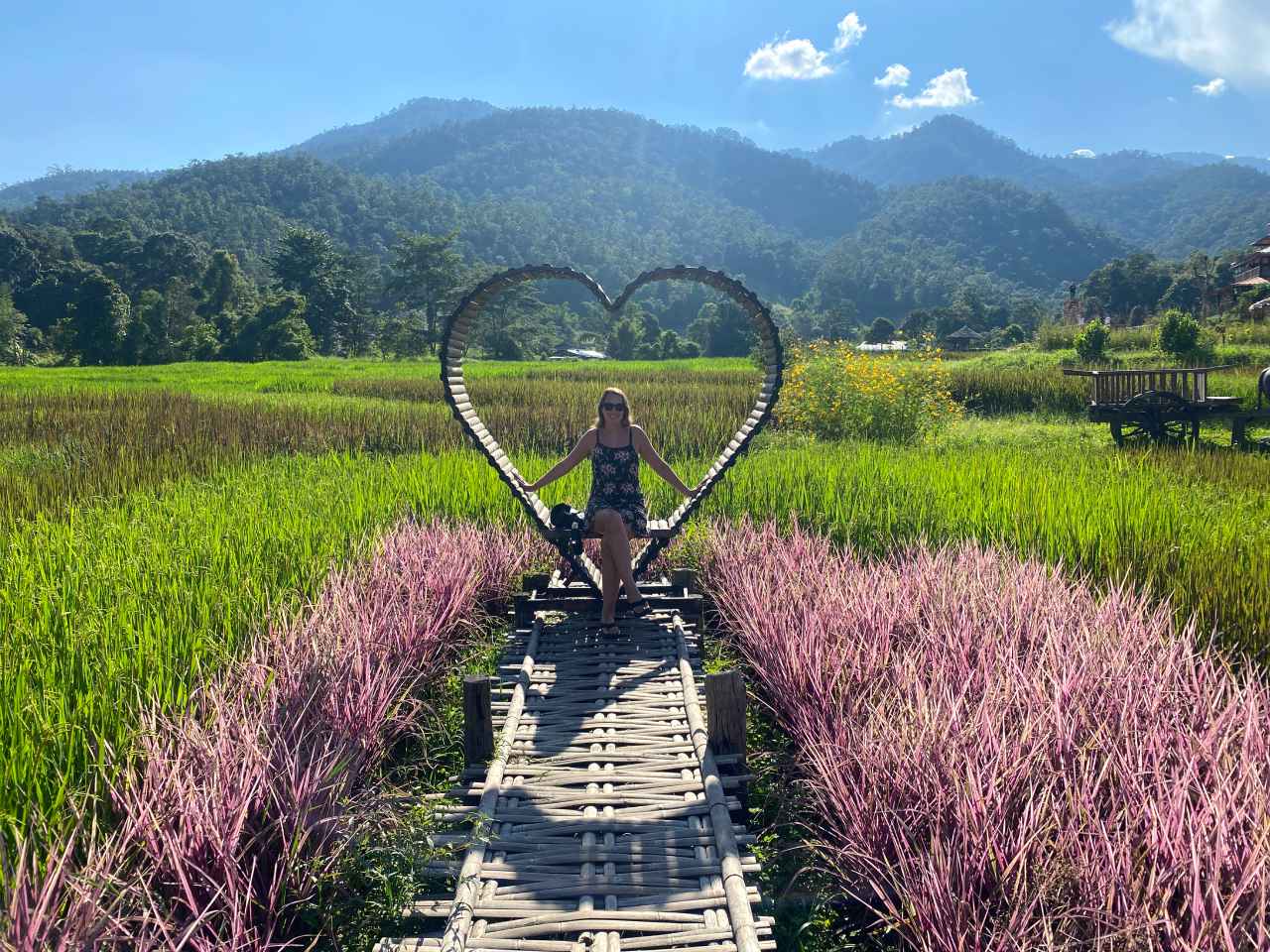
It’s hard to put my finger on exactly why I love Pai so much – is it the nature, the community, the fresh mountain air, or just the feeling that you get when you are here?
There’s plenty to explore and plenty to do but Pai also has a unique vibe – being here feels like you’ve hit the pause button and days stretch out here in a way they rarely do elsewhere in Thailand.
You wake up early because the light is soft and the air is cool and start the day with yoga, meditation and healthy food. Then you spend the day wandering or riding without a plan discovering different waterfalls, temples and viewpoints, and end up watching the sun drop behind the mountains with half the town beside you before moving on to grabbing tasty snacks at the night market and chilling with a jam night somewhere.
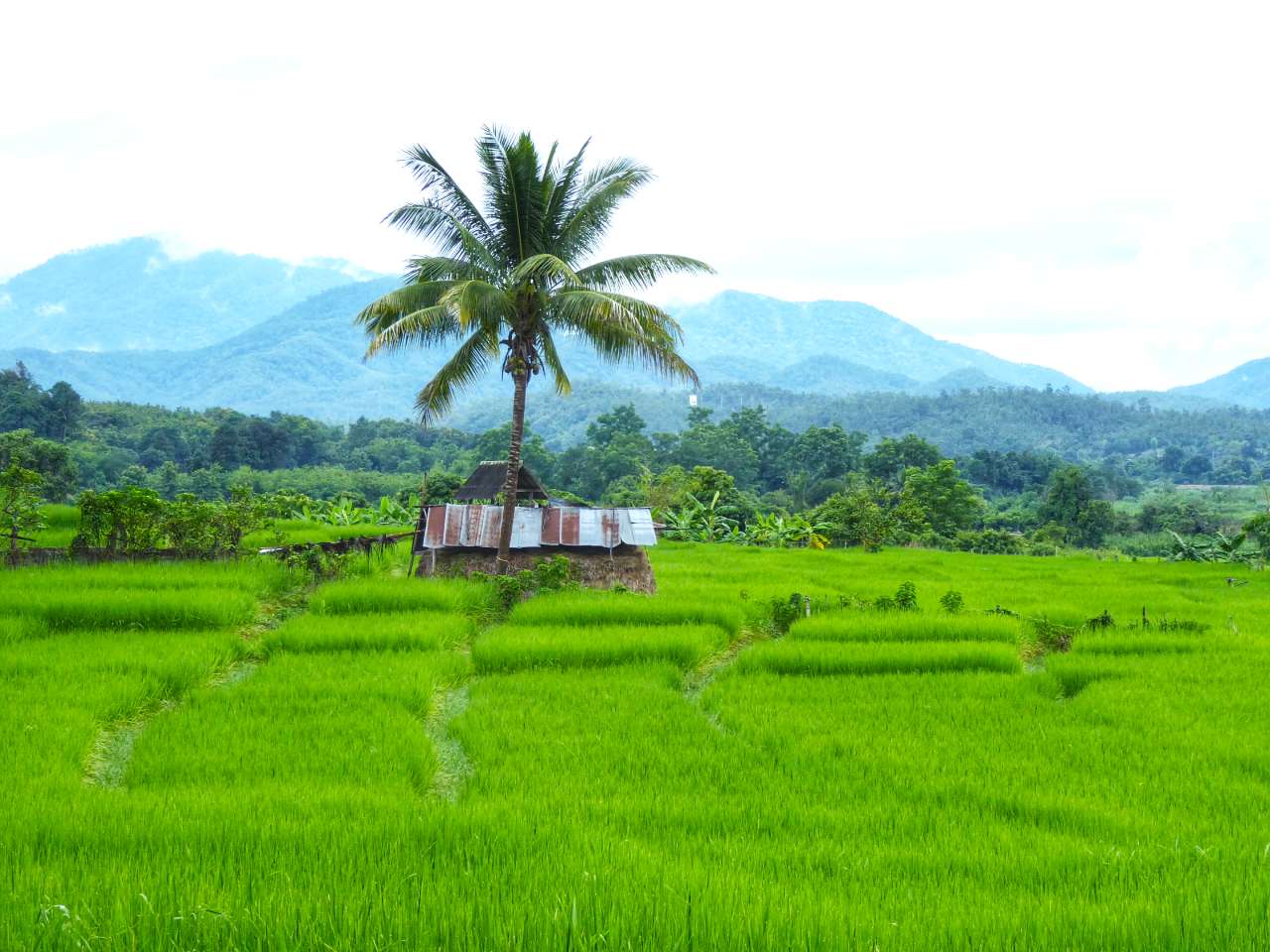
I love that Pai still feels personal, as it’s a small town you quickly recognise faces, favourite cafés remember your order, and evenings usually end with live music rather than loud clubs and crazy parties. It’s social without being chaotic and peaceful without ever feeling boring.
There’s also a strong creative energy here. You’ll meet musicians, artists, writers, yoga teachers, digital nomads, and people who are simply figuring things out, all sharing the same small town of Pai – Thailand’s hippiest place.
The Best Things to Do in Pai
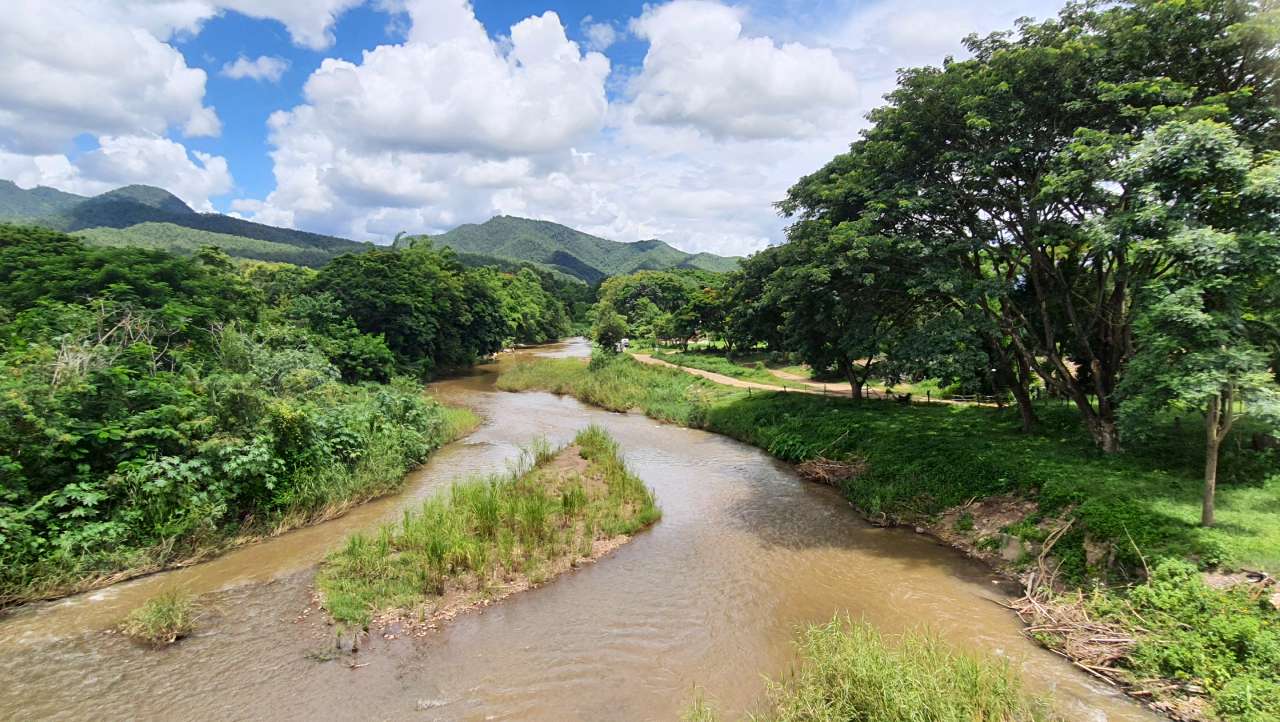
Pai isn’t just a vibe, there’s also plenty to explore and experience in and around the town.
You’ll need transport to reach most of these activities – renting a scooter gives you the most freedom so you can decide on your own route but there are also tour agencies offering tours if you don’t want to drive.
If you’re short on time you can see the highlights with this day trip from Chiang Mai but it’s really worth staying longer if you can. I’ll go into more detail about how to get to and get around Pai later in this blog post.
Sometimes the best days are spent just driving around without a plan and seeing what you can find, from unique natural rock formations, to bamboo bridges, waterfalls, hot springs and temples – here’s some of the best things to do in Pai, Thailand.
Do be aware that, while some of these things are free, many do charge a small entrance fee of on average 20 – 50 baht which shouldn’t break the bank and it goes toward maintenance – so always take out some cash in small change when your exploring Pai.
Motorbike Adventures Around Pai
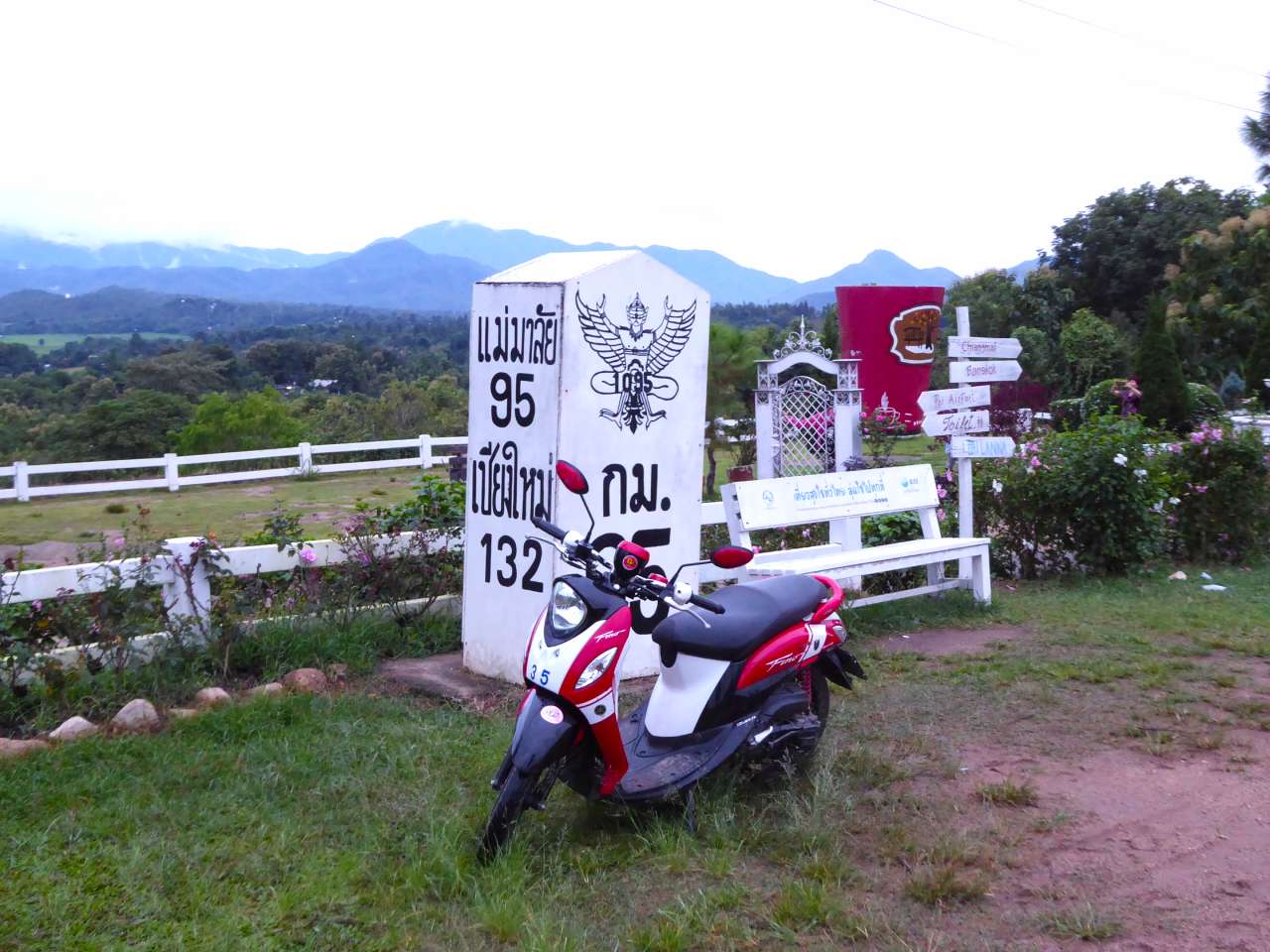
One of the best things you can do in Pai is to simply explore the surrounding nature. Hiring a scooter or motorbike and just driving around the area surrounding pai is a great experience.
The surrounding countryside is mostly quiet country roads that lead to rice paddies, tiny villages, viewpoints, and cafés you wouldn’t otherwise find. Even a short ride can turn into a highlight of your time in Pai.
Riding around Pai is generally not to steep or difficult so it’s actually a good place to learn how to ride a scooter. There are many rental shops in town and not much traffic – there are even a few places that give lessons so it’s a great place to give it a go and see what you discover.
Just make sure your travel insurance covers you for riding. I use SafetyWing for piece of mind while I’m traveling.
Pai Canyon
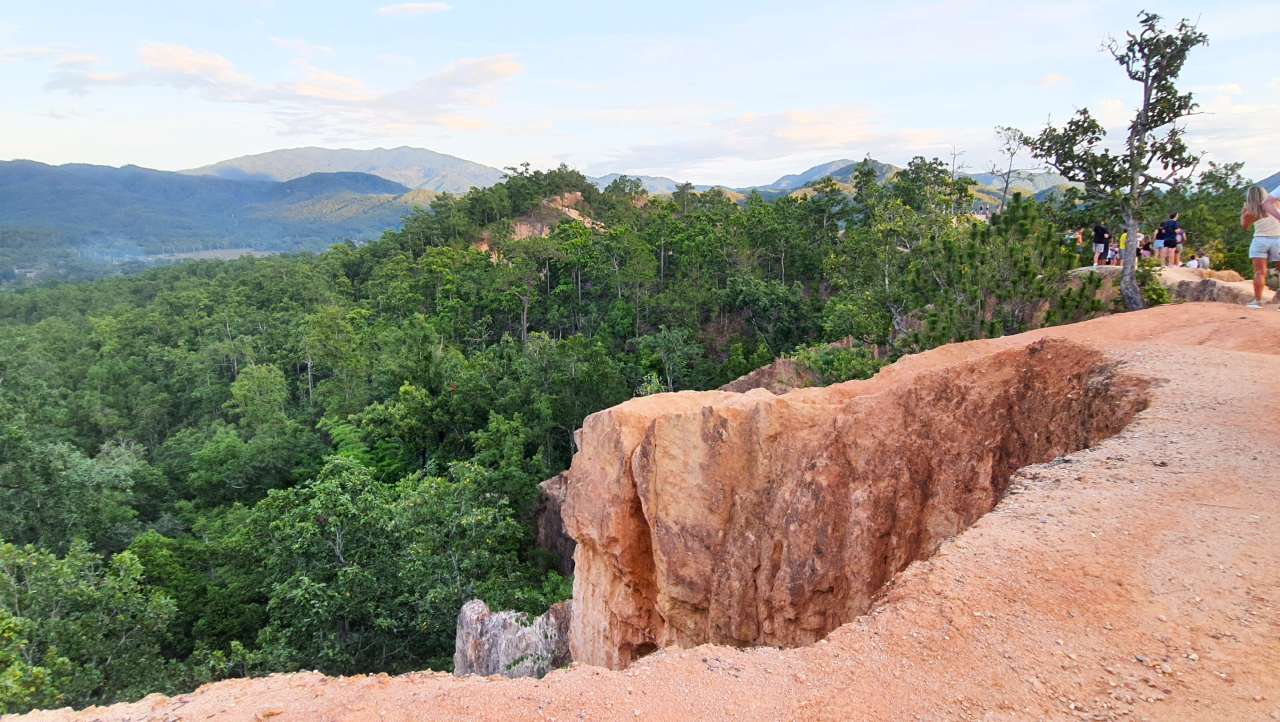
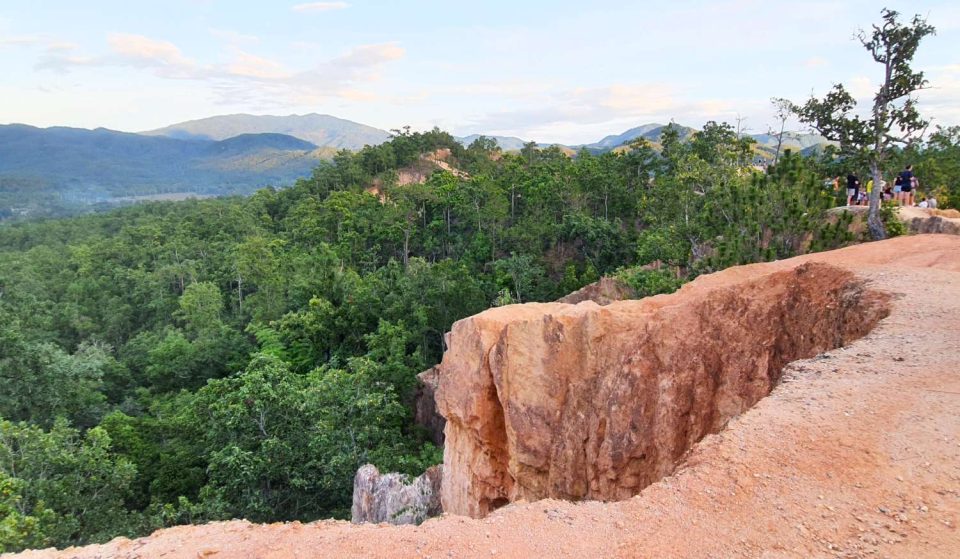
One of the most popular things to do in Pai in visiting Pai Canyon. This is the town’s most famous sunset spot, and even though it gets busy, it still feels special.
Narrow ridges of red earth cut through the landscape, with sweeping views over the valley and distant mountains.
Pai Canyon is a popular spot so I usually walk a little further along the trails to escape the main crowd and find a quieter place to sit.
Just take care near the edges, especially around sunset when people get distracted by the view. There’s a couple of stalls outside selling drinks and snacks for you to enjoy the sunset with. Even if you only have a short time in Pai – don’t miss Pai Canyon.
Boon Ko Ku So Bamboo Bridge
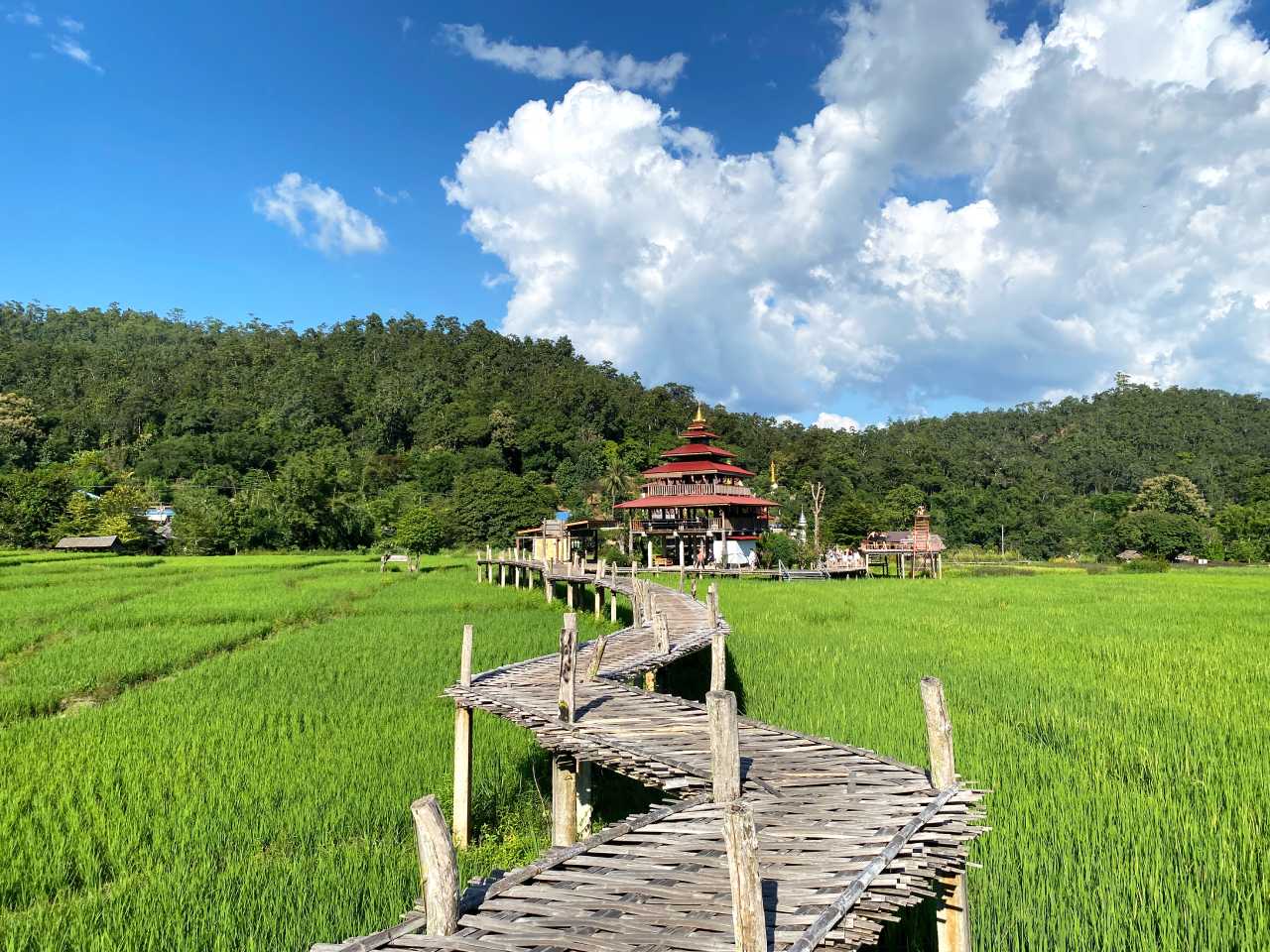
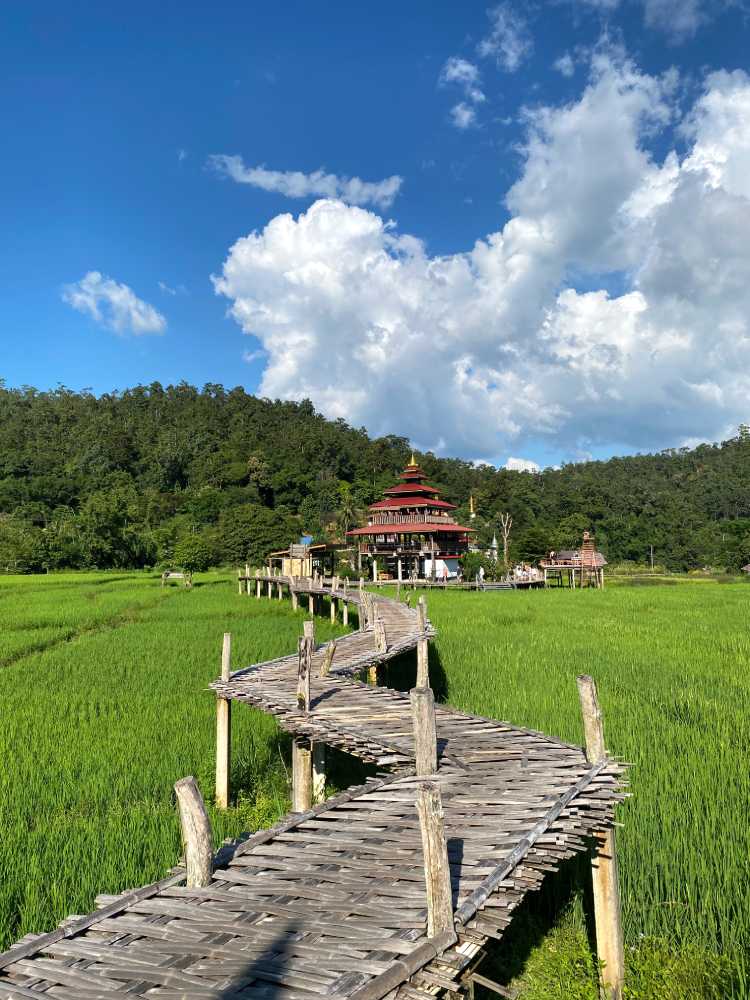
One of the most scenic places near Pai is Boon Ko Ku So Bamboo Bridge. This long bamboo walkway stretches across rice fields and connects small temples and villages and makes for a peaceful and beautiful stroll through unique scenery.
Visiting the bamboo bridge is best in the early morning when mist hangs low over the fields and monks walk quietly across the bridge. It’s also better to visit during or just after the rainy season when the rice is at it’s luscious and most visually captivating.
It’s about 30 minutes outside of Pai so you’ll need to hire a scooter to get here. Be careful as the road to this remote place isn’t great so take it slow and you’ll be rewarded with one of the best experiences in Pai. It’s a flat and easy walk and much less crowded than Pai Canyon and a very photogenic spot.
Soak in the Hot Springs
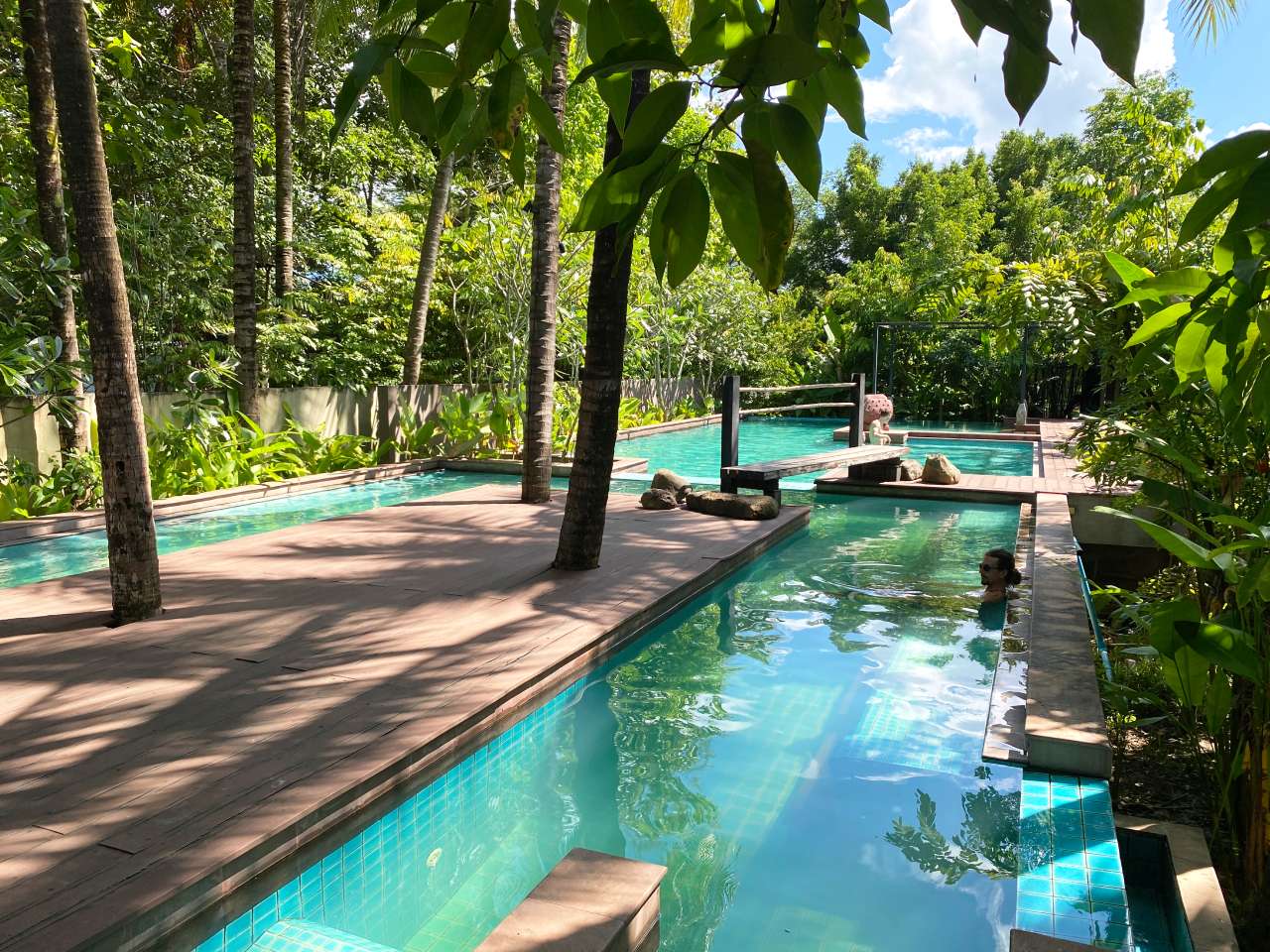
There are several hot springs around Pai so you should make sure to check at least one out.
Not far from town is Pai Natural Hot Spring & Well-being Center which is located near the near the Pai International Meditation Center and offers calm, well maintained hot springs where you can soak under the palm trees in pools of different temperatures.
Sai Ngam Hot Spring is another one of my favourites because it still feels very natural. The pools are set in the forest, the water is crystal clear, and it’s cooler and calmer than the more developed options.
Then there’s Tha Pai Hot Springs, the most accessible hot springs near town and the easiest if you don’t want to ride far. The pools are well maintained, with different temperatures, and surrounded by forest. Tha Pai hot springs are part of a national park so the entrance fee for foreigners is 300 bahts so it’s not somewhere that you’ll go for your everyday dip but it’s still one of the best hot springs in Pai.
Yun Lai Viewpoint
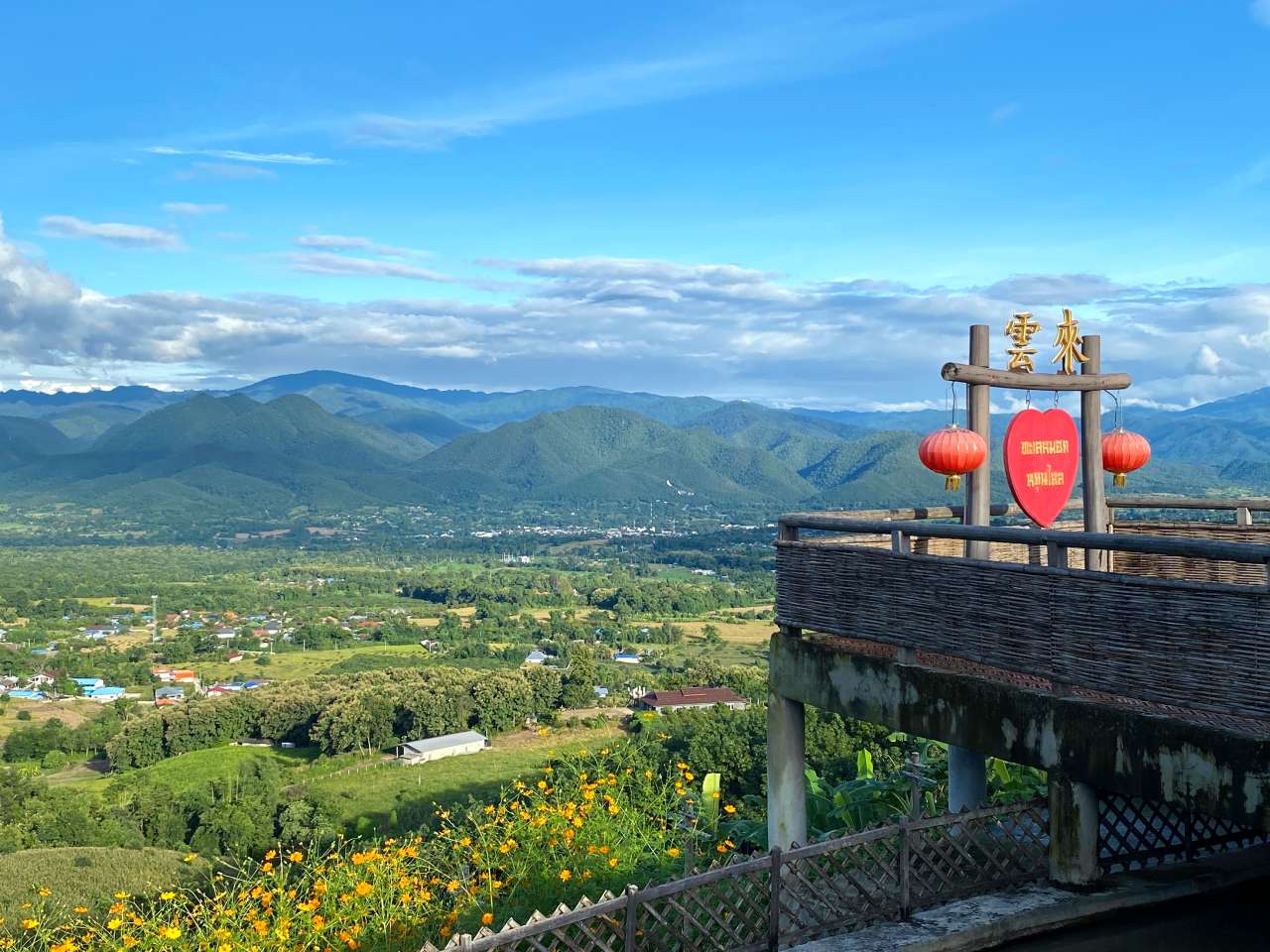
Yun Lai is one of the best sunrise viewpoints around Pai and well worth the early start. The view stretches across layers of mountains, often covered in sea-like mist at dawn, and you can see all the small villages and the town of Pai down below.
As it just above the Chinese village, Yun Lai viewpoint has a bit of a Chinese theme with beautiful red lanterns and a small cafe serving hot tea. There’s a small entrance fee, basic seating and a really nice viewpoint, making it a comfortable place to linger with a hot drink as the sun comes up.
If you can’t make it for sunrise don’t worry, the view is always spectacular so it’s worth a visit at any time of the day. This is one of the best viewpoints in Pai but it’s spacious so you can always find somewhere to sit in silence and contemplate the stunning views ahead of you. It’s quite a steep drive at the end so be careful.
Chinese Village (Santichon)
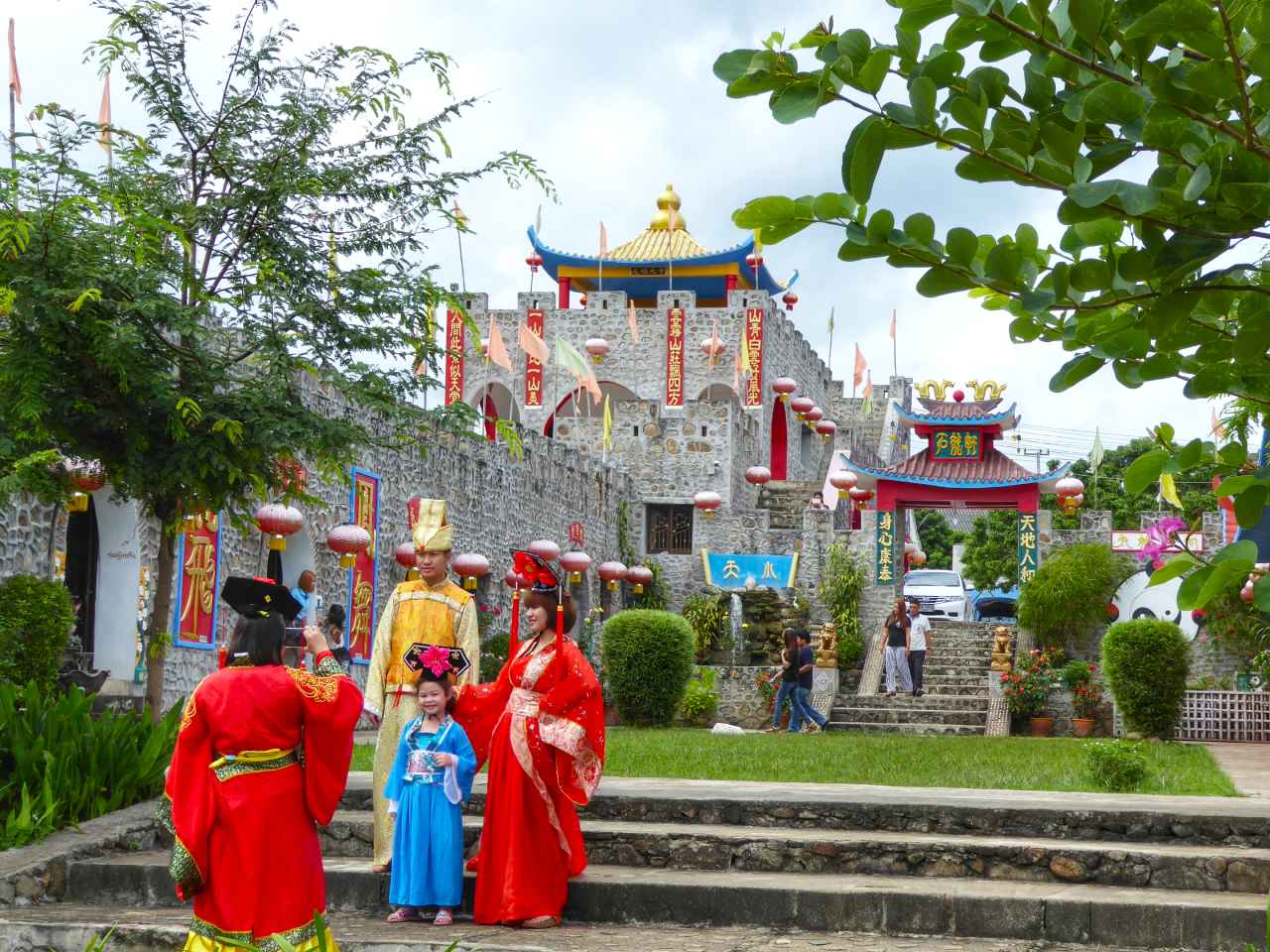
Nearby Yun Lai Viewpoint is a Chinese village called Santichon which offers a glimpse into the Chinese Yunnanese heritage in the area. While the history is interesting the visitor part of the village is pretty touristy.
There’s Disneylandish castle walls and costumed characters and can get packed with tour groups but if you are visiting Yun Lai Viewpoint it’s worth checking out the village on the way down if it’s not too busy. It’s free to enter and there are several places where you can buy Chinese tea, food and souvenirs.
Discover the Waterfalls
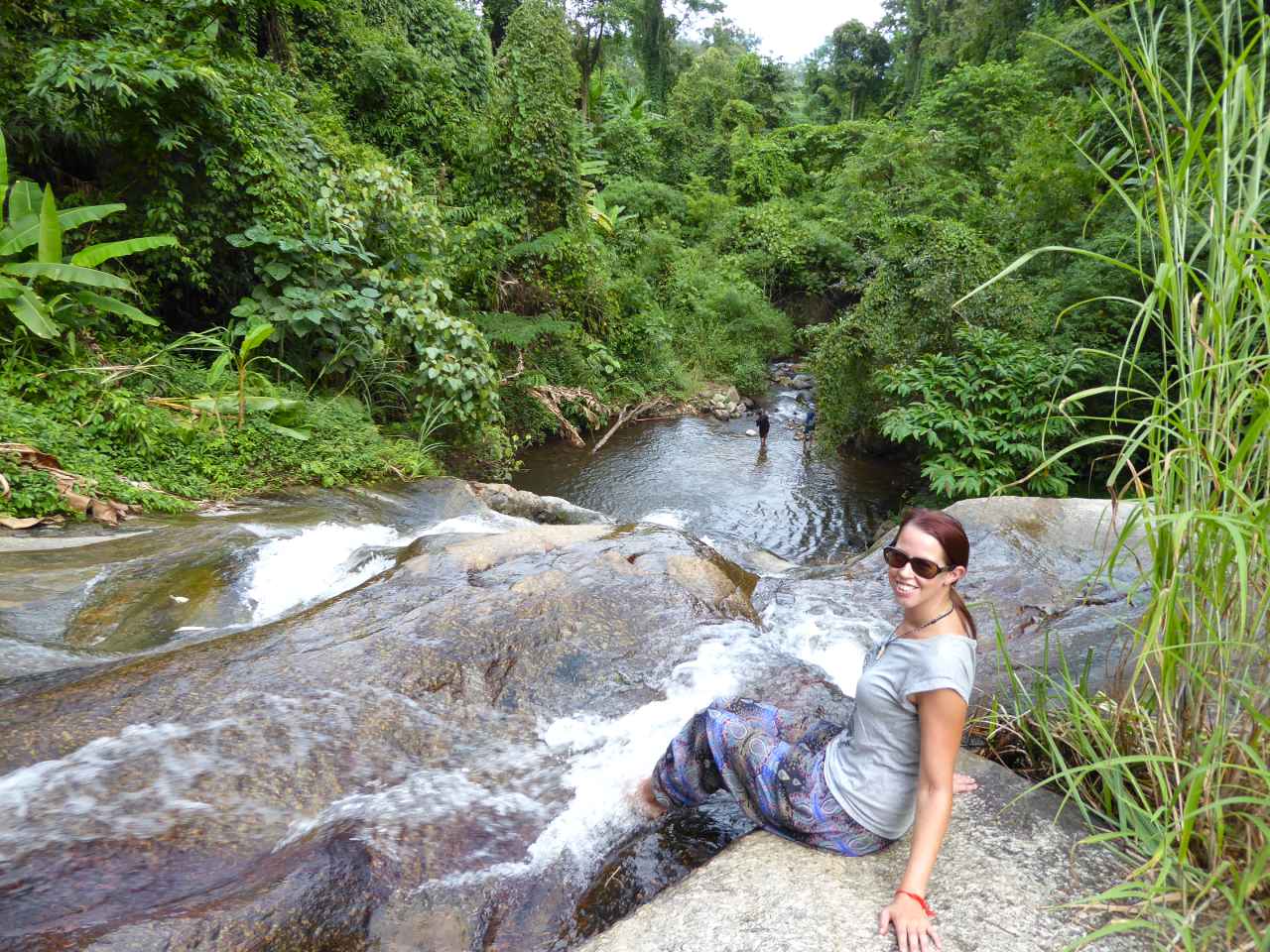
There are several waterfalls near Pai that you can visit. Mo Paeng Waterfall is one of the most popular because it is one of the most accessible and playful waterfalls.
During the dry season, the smooth rock formations create natural slides into the river that make it a much loved swimming and lounging spot, while the rainy season brings stronger flow and cooler pools. It’s not a long hike to get there so it’s a great place to just enjoy and have fun.
Another waterfall, Pam Bok waterfall feels more enclosed and dramatic than Mo Paeng, with high rock walls funneling water into a cool pool below. It’s a short walk from the parking area and works well on hot afternoons when you want somewhere shaded and refreshing.
If you’re up for something a bit more adventurous Mae Yen Waterfall is one of the best options. Reaching the waterfall involves a scenic jungle hike that crosses the river multiple times, making the journey just as enjoyable as the destination.
The trail is relatively flat but can be muddy and slippery, especially after rain, so good footwear helps. At the end, you’re rewarded with a wide, powerful waterfall that feels refreshingly wild. It’s quieter than the roadside waterfalls and ideal if you want a half-day activity away from the crowds.
Enjoy Pai River
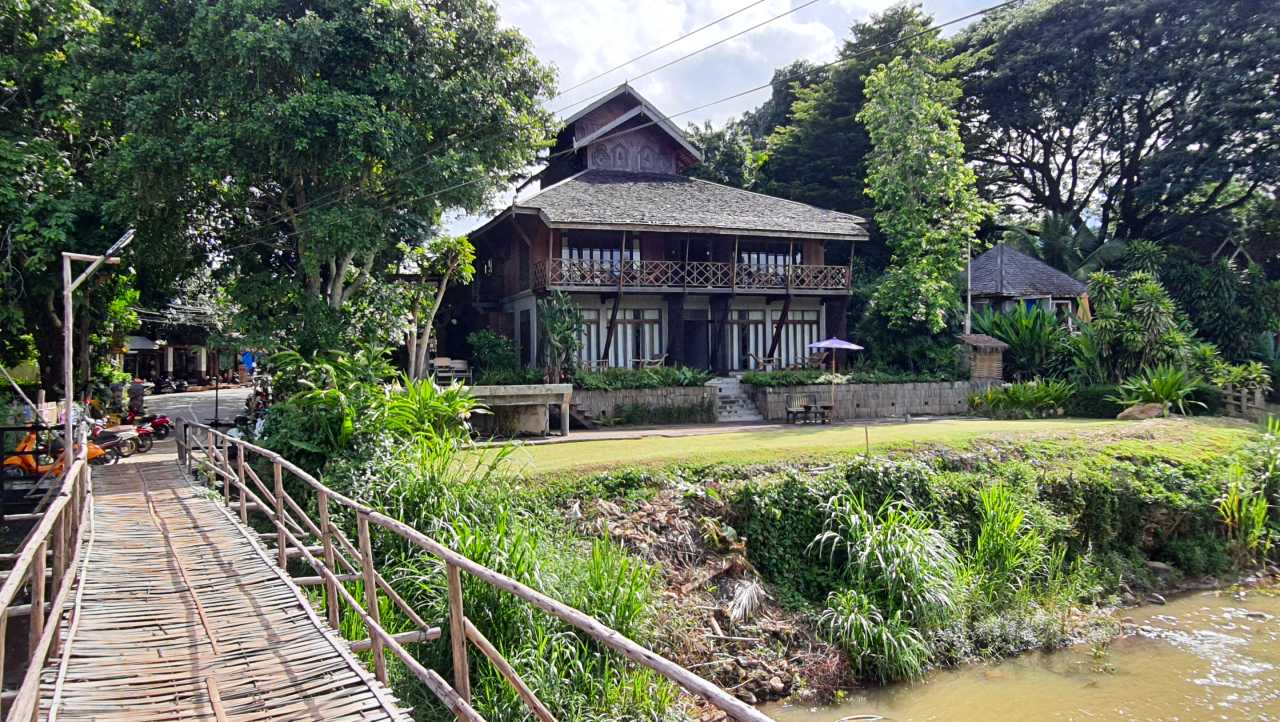
Pai River runs through the town and there’s many ways to enjoy it from strolling across the bamboo bridge and relaxing at the riverside cafes and guesthouses to getting out on the water and going tubing on the river.
Tubing on the Pai River is one of those classic Pai experiences that can end up being a real highlight. You rent an inner tube, get dropped upstream, and then float slowly back towards town, passing rice fields and jungles and stopping off at little make shift bars on the riverside.
The experience usually takes about one to two hours, depending on water levels and how often you stop to swim or relax.
There’s also tipsy tubing which includes a fun local guide, live DJs, games and alcoholic drinks which is super popular with backpackers looking to meet new people and enjoy some drinks on the river. You can book your Pai tipsy tubing experience here in advance to avoid disappointment – sometimes spots do fill up in peak season.
The best time to go tubing is just after the rainy season when the water level is high enough to keep things moving without being rough. In the dry season, the river can be shallow in places, which means you may need to hop out and walk sections.
Explore Pai’s Temples
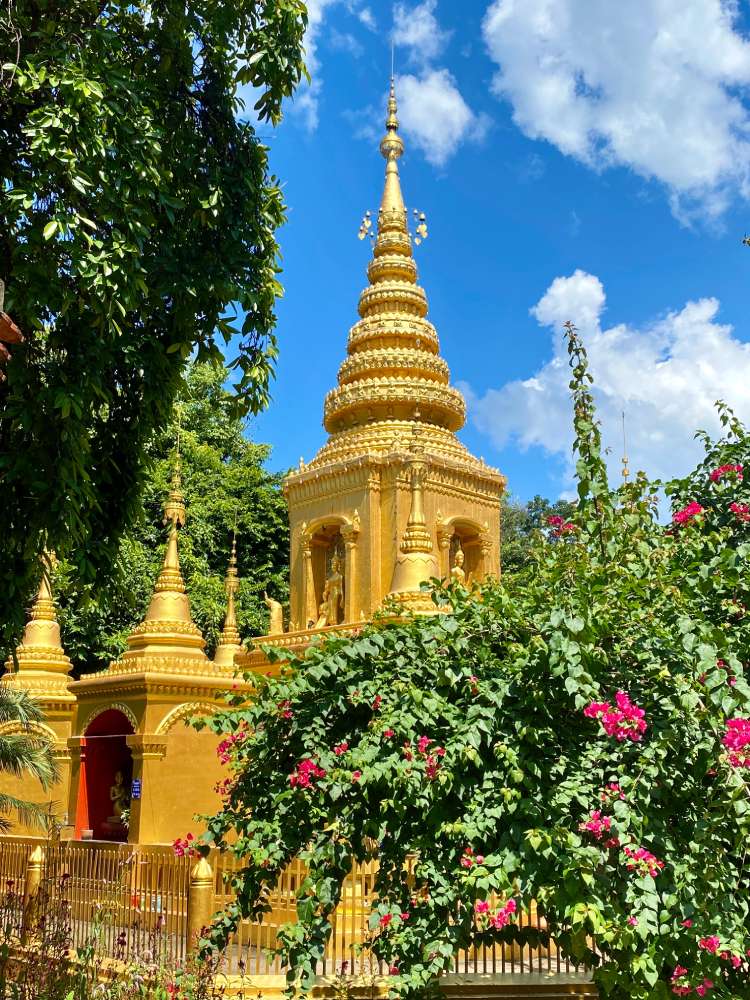
Pai’s temples are slightly different from what you’ll see in other areas of Thailand and are some of the most rewarding stops in town. Unlike many tourist-heavy destinations, the temples in Pai still feel quiet and genuine. Most are easy to reach by scooter and none require more than a short walk, so you can visit several in a single morning.
In town, Wat Klang is the central temple and the oldest in Pai. It’s compact and unassuming, tucked into the middle of the village rather than perched dramatically somewhere, and that’s partly what makes it feel authentic. It’s an active place of worship so you’ll often find monks going about their day, which gives it a lived-in quality you don’t always get at more famous, touristy temples in Thailand.
A short ride from the centre, Wat Nam Hu is worth a stop for its unusual history. The temple houses a sacred Buddha image said to have been filled with holy water, and local legend holds that it arrived in Pai by floating upstream. It’s a small temple and won’t take long to visit, but it has a calm atmosphere and the surrounding garden is well kept.
Wat Phra That Mae Yen – The White Buddha, also known locally as the hilltop temple, is the most famous temple in Pai. A long staircase of several hundred steps leads up to a huge white Buddha statue (hence the name) which is a little worn.
The real draw is the view from the top — a sweeping panorama over the Pai valley that’s especially beautiful in the early morning or a sunset. It’s well worth the climb to reach this peaceful spot, even if temples aren’t normally your thing. The atmosphere is calm, meditative and almost magical so you might want to spend a while here soaking up the views and the vibes.
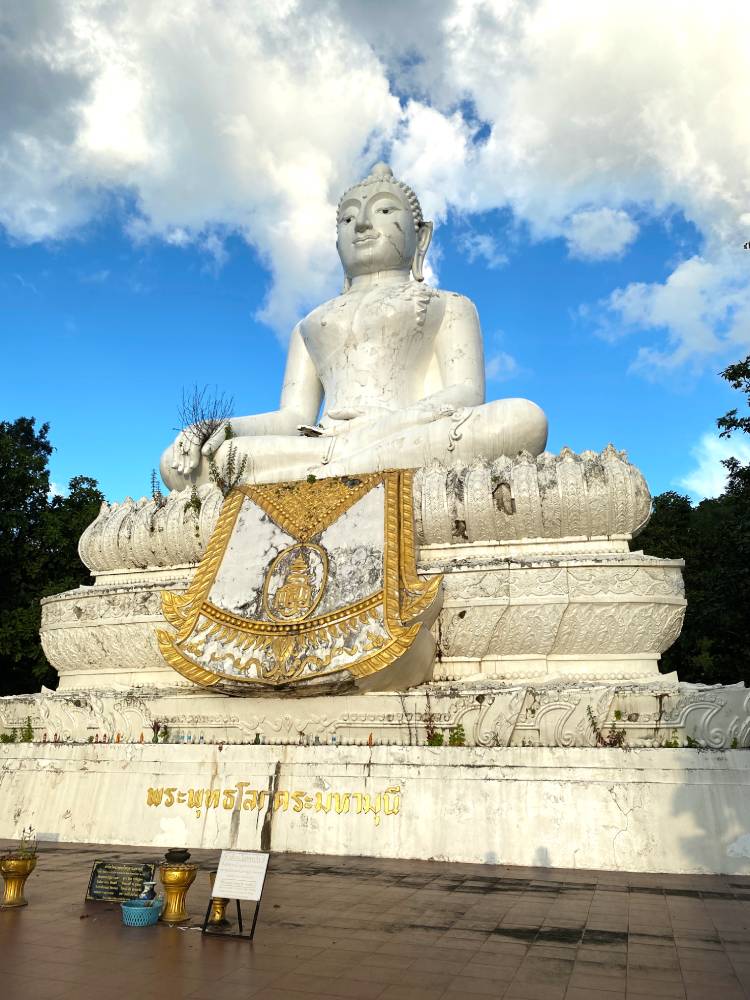
Wat Phra That Mae Yen is not far from Pai and can be seen from all around. You can ride most of the way up by scooter and then climb the long staircase. Sunset is especially popular, but arriving slightly before golden hour gives you time to find a quiet spot and take in the view before it gets busy.
Top Tip: When visiting any temple in Pai, dress respectfully with shoulders and knees covered and take off your shoes before entering any building. Most temples don’t charge an entrance fee, though donations are always welcome.
Pai Memorial Bridge
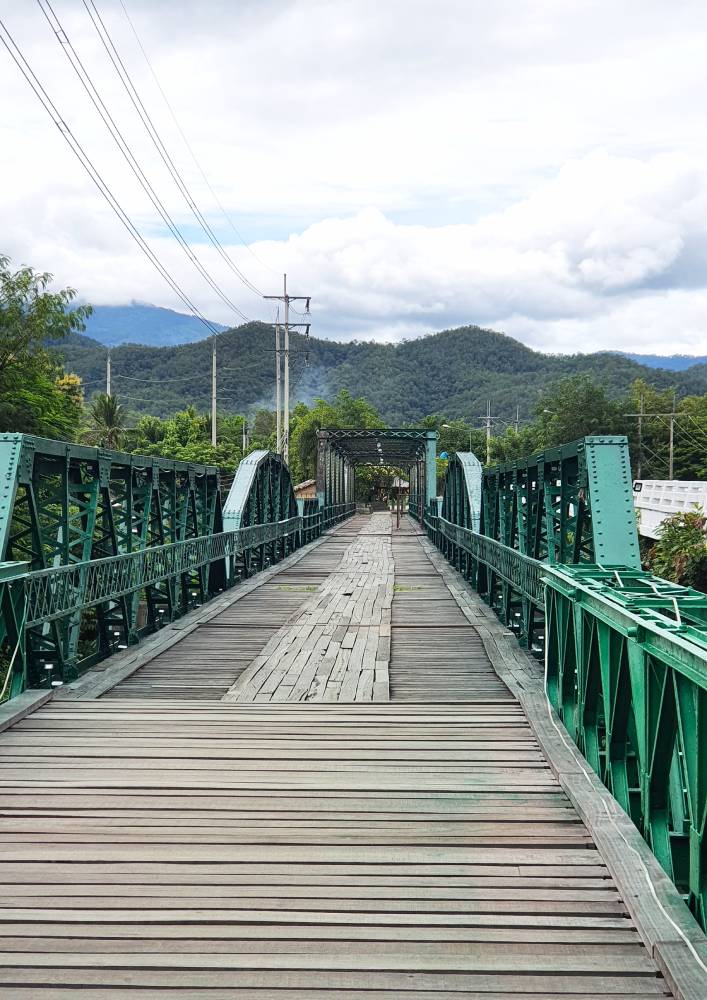
Pai Memorial Bridge is an old WWII-era bridge located on the road into Pai. The green steel and wood bridge is structurally reminiscent of the famous Bridge on the River Kwai in Kanchanaburi and played a strategically important part in the war.
Today the rickety wooden floorboards only carry pedestrians and there is an adjacent concrete road bridge on Highway 1095 for vehicles. The bridge is worth a quick stop if you’re exploring by scooter. It’s a good place to stretch your legs, take photos, and learn a little about Pai’s history while passing through.
Yoga, Meditation, and Wellness
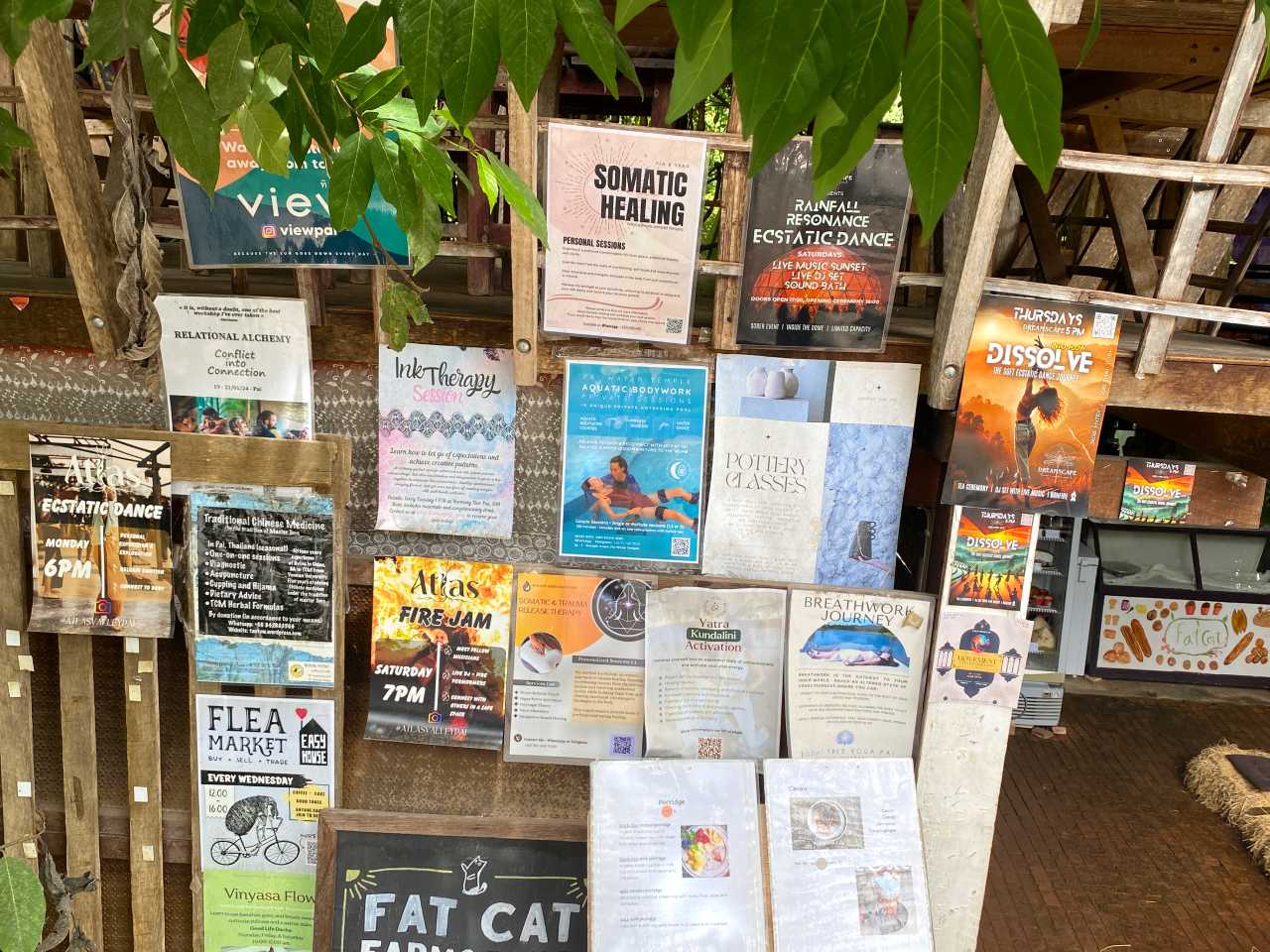
Pai is a natural place to slow down and reconnect with nature and yourself. There are many places offering drop in sessions for yoga classes, herbal steam saunas, meditation sessions and all sort of other workshops and therapies in Pai. You can find out what’s happening through the flyers posted in cafes around town.
A morning yoga class, usually about an hour or 90 minutes long, followed by a long veggie breakfast or vegan brunch is a very Pai way to start the day. If you want something deeper, longer retreats and meditation centres offer longer mediation courses just outside town if you want to be fully immersed in your practice.
There are plenty of places in Pai to practice yoga and meditation. Pai Yoga Shala is one of the most popular studios in town. Classes are well run, welcoming to all levels, and easy to drop into if you’re only staying a few days.
There’s also Pai Circus School which is known for acro yoga, movement, and fire spinning. Even if you don’t take a class, it’s a fun place to hang out and watch what’s going on.
For meditation and longer stays, Wat Pa Tam Wua is just outside Pai and offers free meditation retreats. It’s more structured and traditional, but many people come to Pai specifically to spend time there.
There’s also Pai International Meditation Center where you can learn from Buddhist monks in a modern, sprawling meditation park. They offer daily drop in sessions as well as longer courses.
Herbal steam saunas are also everywhere, and they’re very much part of Pai culture rather than a tourist add-on. They’re cheap, social, and surprisingly effective.
If you’re into yoga, meditation and alternative therapies you’ll never be short of things to do in Pai!
Sunset at Two Huts
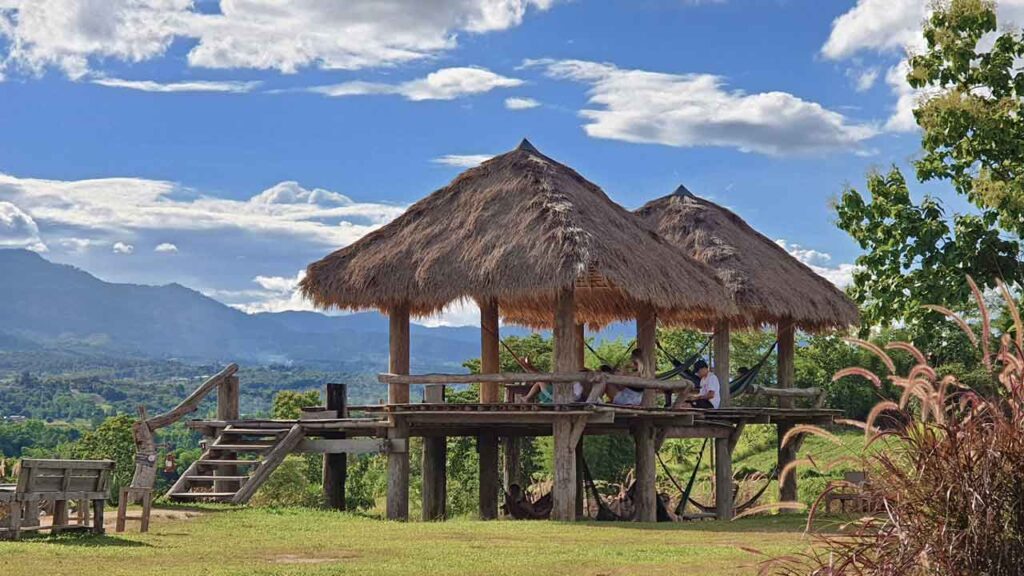
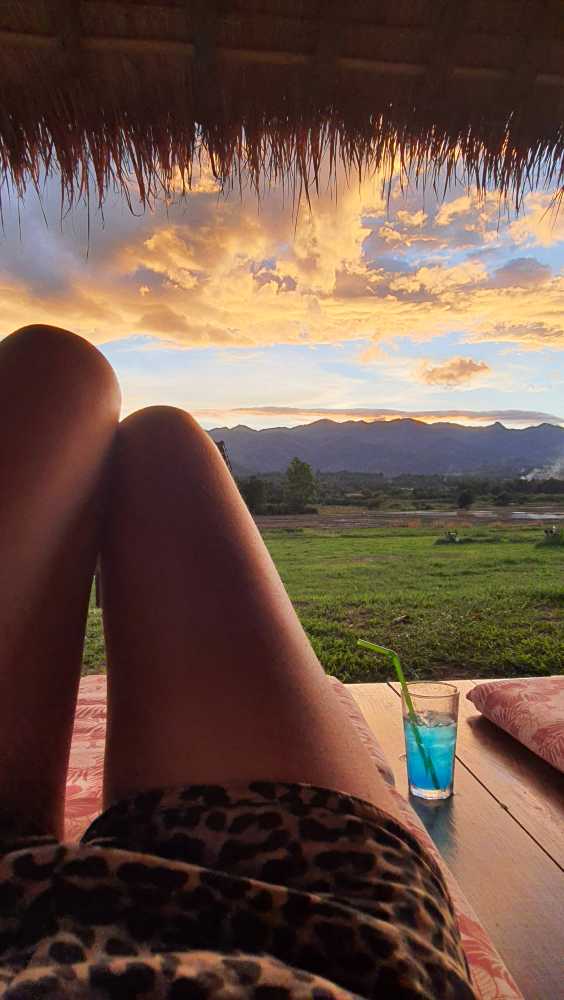
Simply watching the sun go down at Two Huts Pai has become one of the best things to do in Pai. Set on a hillside just outside town, Two Huts is made up of simple bamboo platforms overlooking the valley, with uninterrupted views as the sky shifts from gold to deep blue.
You order a drink, find a hammock to swing in or kick back on some comfy cushions, and let the evening unfold at its own pace. Arrive a little before sunset to get a good spot, especially in high season, and be prepared to linger longer than planned once the music and mood settle in.
If Two Huts is too busy for you or you fancy exploring just a bit further, there’s also 10 Rai which is a bar and restaurant that also has great sunset views just down the road from Two Huts. They sometimes have live music nights with DJ’s and ecstatic dance sessions too.
Tham Lod Caves
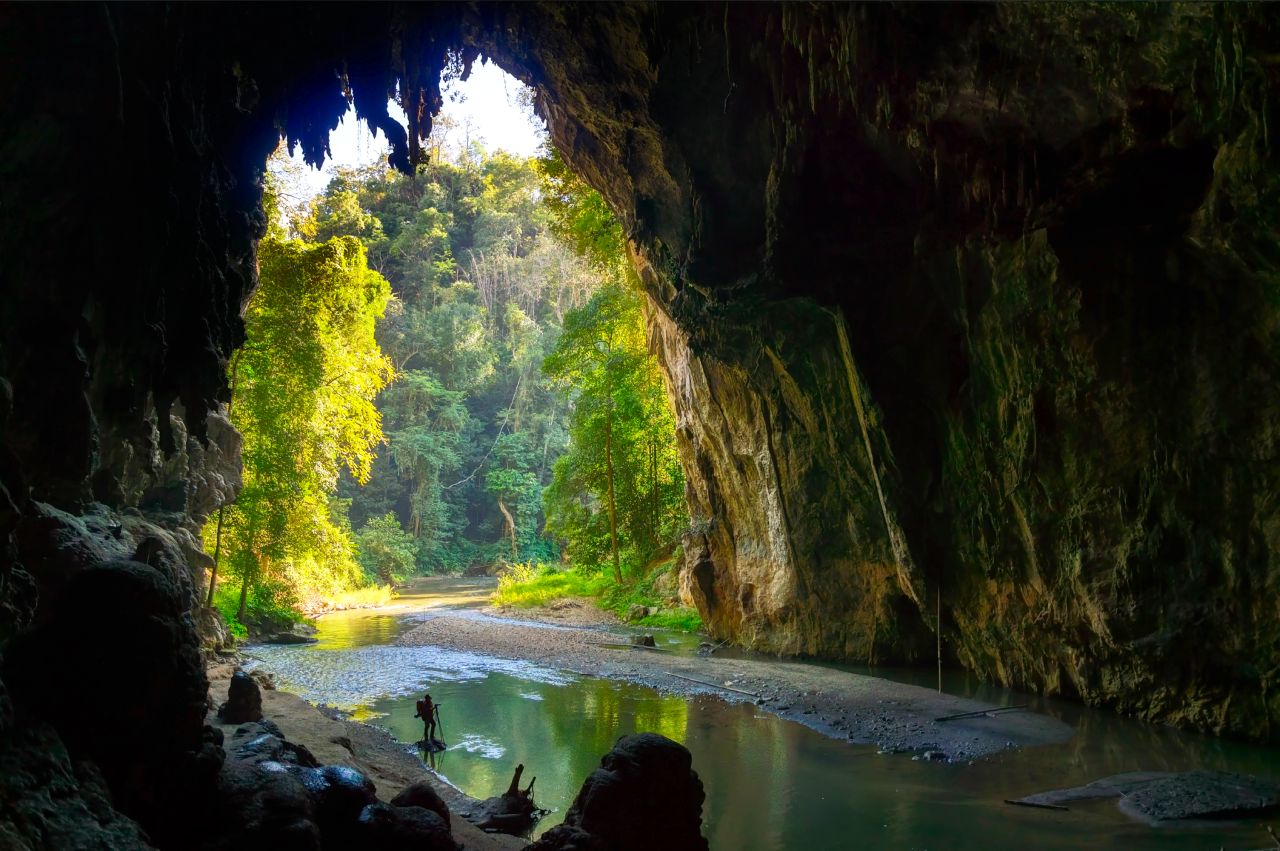
Another unique thing to do near Pai is visiting Tham Lod Cave. Located near the village of Soppong, about 1 hours drive from Pai, the cave system is vast and dramatic, with towering stalactites, ancient coffins, and a river running straight through it.
Exploring the caves involves walking and floating on bamboo rafts guided by locals carrying lanterns, which gives the whole experience a timeless feel. It’s cool inside year-round and makes a great escape from the midday heat. Tham Lod works well as a day trip from Pai. This Tham Lod Caves day trip includes transport from Pai and also visits some epic viewpoints and local villages on the way.
Where to Eat and Drink in Pai
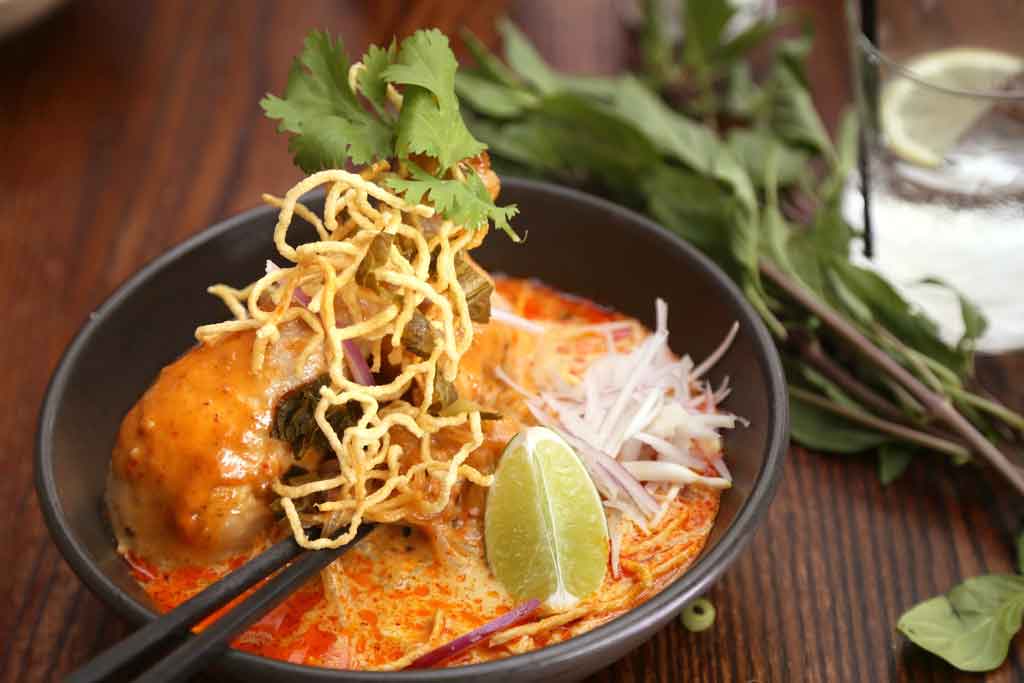
For a small town in a mountain valley in Mae Hong Son province, Pai’s food scene punches way above what you’d expect. There’s loads of nice places to eat and drink Pai – you’ll not go hungry here!
From cute garden cafes to atmospheric riverside bars, and of course not forgetting the daily night market and numerous local Thai restaurants – there’s plenty of choice of both delicious Thai food and international food in Pai/
Here’s some of the best places to eat and drink in Pai
The Best Cafes in Pai
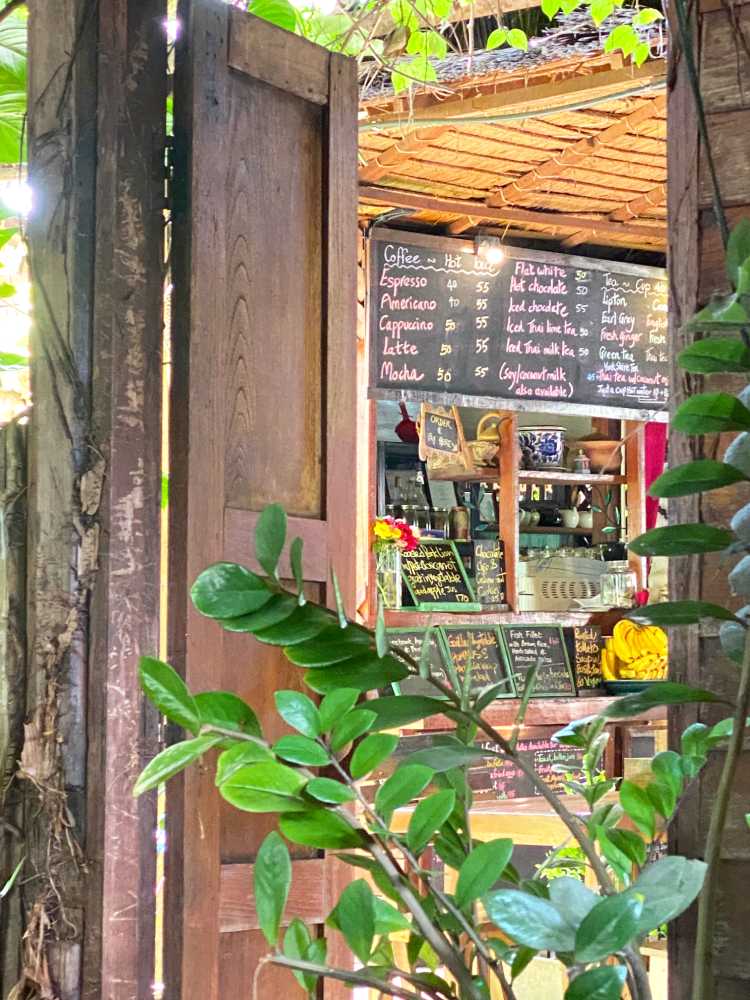
Pai has a strong café culture with plenty of options for good coffee, vegetarian, vegan and healthy organic food. Many of Pai’s cafes are very chill places where it’s easy to spend a few hours over a relaxed meal.
Some of the cafe’s I always end up in are:
Om Garden Cafe is one of those places that seems to pull everyone in at some point. It’s relaxed, plant-filled, and ideal if you want a long breakfast, a smoothie bowl, or somewhere to sit with a notebook for an hour or two.
Café de Pai is a long-standing favourite and one of the most recognisable cafés in town. It’s busy, lively, and right in the centre near 7/11 and the temple which makes it perfect for people-watching. The menu is broad, covering breakfast classics, Thai dishes, and strong coffee, and it’s often one of the first places people land when they arrive in Pai.
The Pedlar is a great option if you’re after something a bit more refined without losing the relaxed Pai feel. The food is well executed, the coffee is good, and it works just as well for a late breakfast as it does for lunch. It’s a good place for digital nomads to take a laptop and get some work done while enjoying the coffee and relaxed ambience and the location in the center of Pai is super convenient.
Earth Tone feels like classic Pai. It’s serves healthy, local, and sustainable vegan and vegetarian food with a cosy, social, rustic vibe. It’s a place where conversations with strangers start very easily. Earth Tone is a little bit out of town but has a super relaxed vibe surrounded by lush greenery, great for a long, lazy brunch.
Best Nightlife, Restaurants and Bars
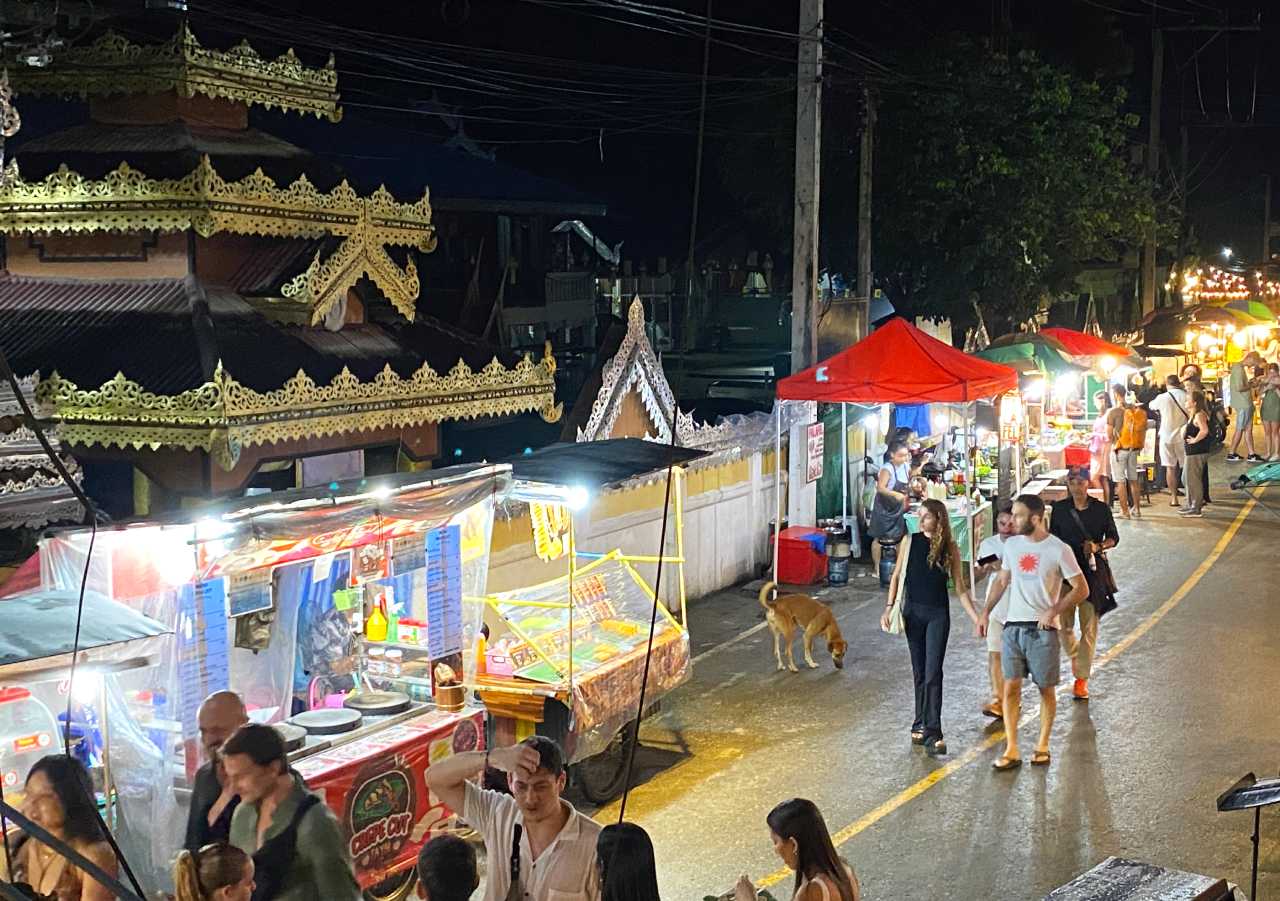
Eating in Pai is mostly very casual, you’ll find plenty of western food in the cafes and restaurants and loads of very affordable Thai food at the night market/ main walking street in downtown Pai.
The main street is also where you’ll also find the bus station, tour agencies, shops and banks so it’s the first port of call for most travellers in Pai during the day and a lively night market and walking street after night falls.
The Pai Night Market or walking street is the social heart of Pai after dark. There’s street food, clothes and souvenir stalls as well as little bars set up by the roadside. It’s a great place not only to get something cheap to eat but also about wandering, chatting, and easing into the evening.
You’ll find excellent pad thai, khao soi (a chicken noodle soup) grilled meats, Burmese-style curries, vegan stalls, gyozas, rotis, and fresh fruit shakes. It’s easy to eat well here for very little money.
For something more sit-down, Charlie & Lek is one of the most consistently good Thai restaurants in town. It’s relaxed, friendly, and great if you want proper northern Thai dishes without fuss.
Na’s Kitchen is another of the best restaurants in Pai and a long-time favourite. It’s simple, affordable, and always busy for a reason, especially in the evenings.
If you want a slightly more upmarket atmospheric dinner, try the Witching Well which sits right by the river and works well for a relaxed meal. If you don’t mind heading a bit out the center then check out Silhouette Restaurant & Bar at the Reverie Siam Resort – it works well for sunset drinks followed by Thai-Western fusion dishes.
Pai’s nightlife is mellow, musical, and social rather than wild but there are many bars, some with live music, on the main street in downtown Pai.
Bars change hands frequently, but some long running spots include Yellow Sun Bar, one of those places you stumble into and then keep returning to. Live music most nights, candles, floor seating, and a very Pai crowd.
There’s also Bebop Bar is a classic late-night stop with blues and rock sessions that often turn into proper jams. Even if you’re not drinking much, it’s worth going for the atmosphere alone.
I also loved Art in Chai, a cute hippie cafe with great chai and cakes and an open mic every Thursday – a very Pai experience.
Pai is a popular backpacker hotspot but the nightlife is a long wat from the rowdy Full Moon Parties that you’ll find on Koh Phangan.
Evenings in Pai center around live music bars, open mic nights, ecstatic dance sessions, acoustic sets, and spontaneous jam sessions.
Some nights are lively, others are low-key, but there’s almost always somewhere to sit with a drink and listen to music drifting through the air and meet other travelers.
Where to Stay in Pai – Best Hostels and Hotels
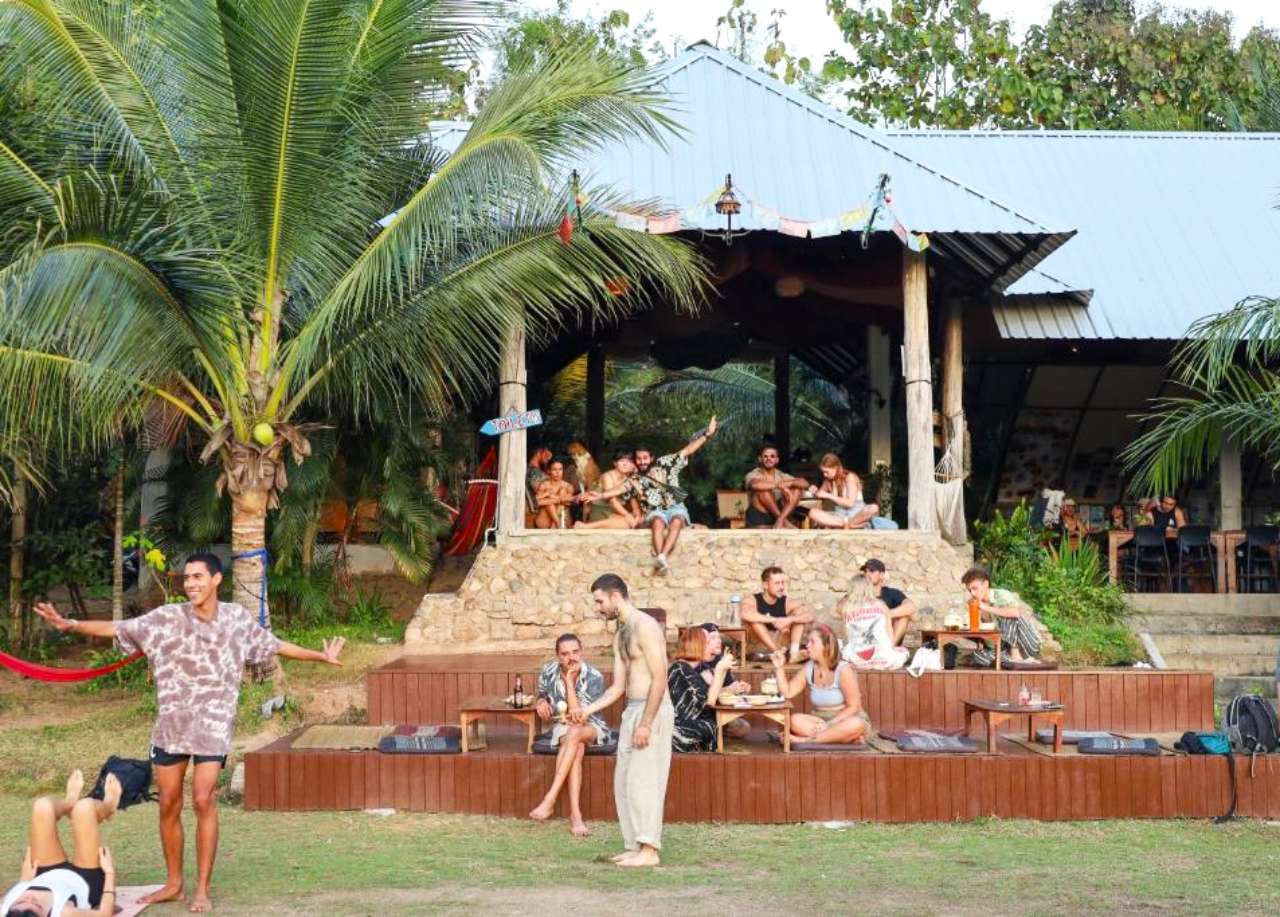
There are plenty of places to stay in Pai – the main decision you need to make is whether you want to stay in town or slightly outside.
If you don’t plan on renting a scooter then choosing to stay in Pai town is a good idea as you’ll be close to everything, but if you prefer to escape into nature and plan on having your own transport then it’s better to stay just outside in the surrounding countryside for that back to nature experience.
One of the best places to stay in Pai is Atlas Valley Hostel. Set on a hillside with wide-open views, it’s social without being chaotic and attracts a friendly mix of travellers. The communal areas and activities are a big part of the experience, especially at the free morning yoga classes and sunset sessions, and it’s a good choice if you want to meet people without staying right in the middle of town.
Another great hostel is Pai Circus Hostel which attracts a fun, sociable crowd and has a strong community feel, especially around sunset. They even have an infinity pool and massive pool side bar with great views.
For budget travellers who want a private room I recommend Breeze of Pai. This popular and long-running guesthouse has clean, decently sized rooms and offers excellent value for money. There is a block of rooms plus detached bungalows in the garden, with fan or air-con options. All come with private bathroom and hot water.
For mid range travellers seeking somewhere central but calm, Pai Village Boutique Resort is a great option. It’s close to everything but still feels tucked away, with tropical gardens, a pool, and a relaxed atmosphere on the riverside.
If you’re looking for something more upmarket, Reverie Siam Resort is one of the most beautiful places to stay in Pai. Inspired by northern Thai and Shan architecture, it feels elegant without being overally formal and it’s ideal if you want a more comfortable base while still being close to town.
How to Get to and Get Around Pai
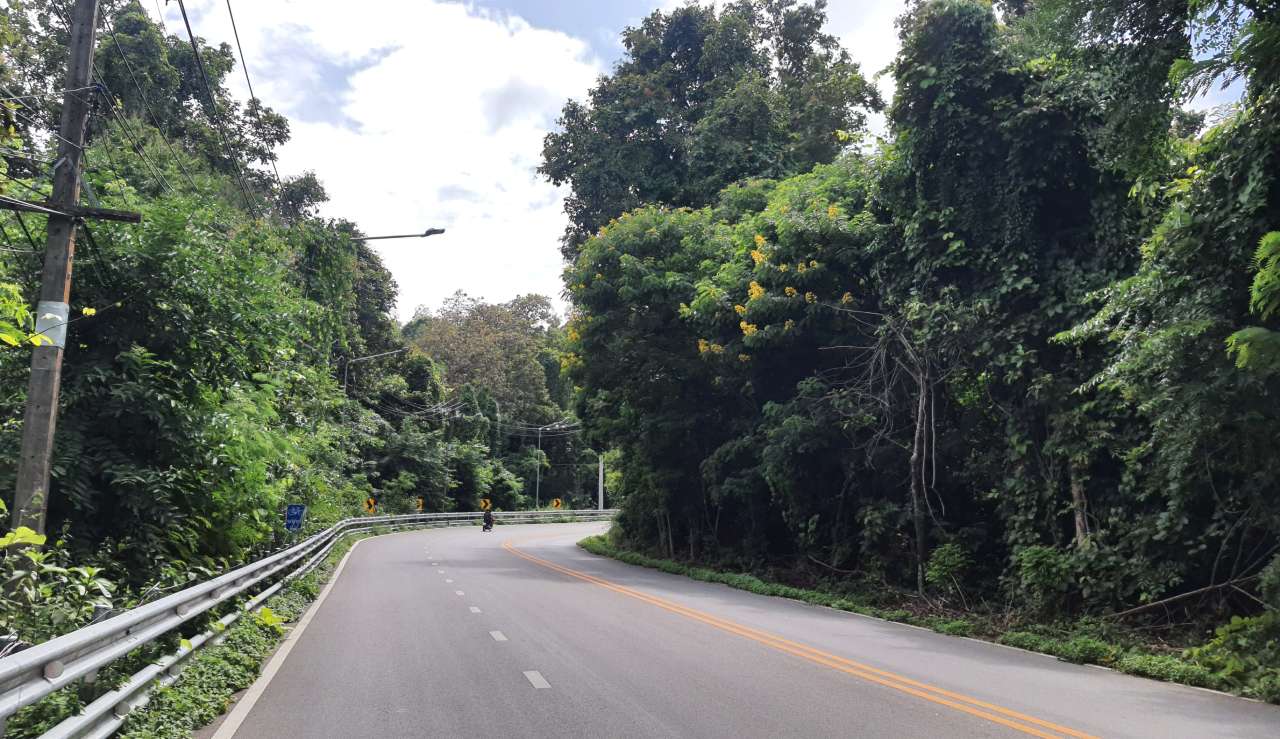
Getting to Pai is part of the experience, and for many people it’s the most memorable journey of their trip in northern Thailand.
Pai sits deep in the mountains of Mae Hong Son province, around 135 kilometres northwest of Chiang Mai, and the route is famously winding.
The most common way to reach Pai is by minivan from Chiang Mai. Minivans leave regularly throughout the day from Chiang Mai Arcade Bus Station, with the journey taking around 3 to 4 hours depending on traffic and weather.
One of the most trusted minivan companies is Aya service. If you visit in high season, you should book your return trip back to Chiang Mai a few days in advance as the minibuses do get full.
The Chiang Mai to Pai road includes 762 curves, which is something you’ll hear mentioned a lot, and for good reason because if you’re prone to motion sickness it can feel like a long ride.
If that’s the case, I’d strongly recommend sitting near the front, avoiding phone screens, and taking something beforehand. The views are beautiful, but the ride can be intense for some people.
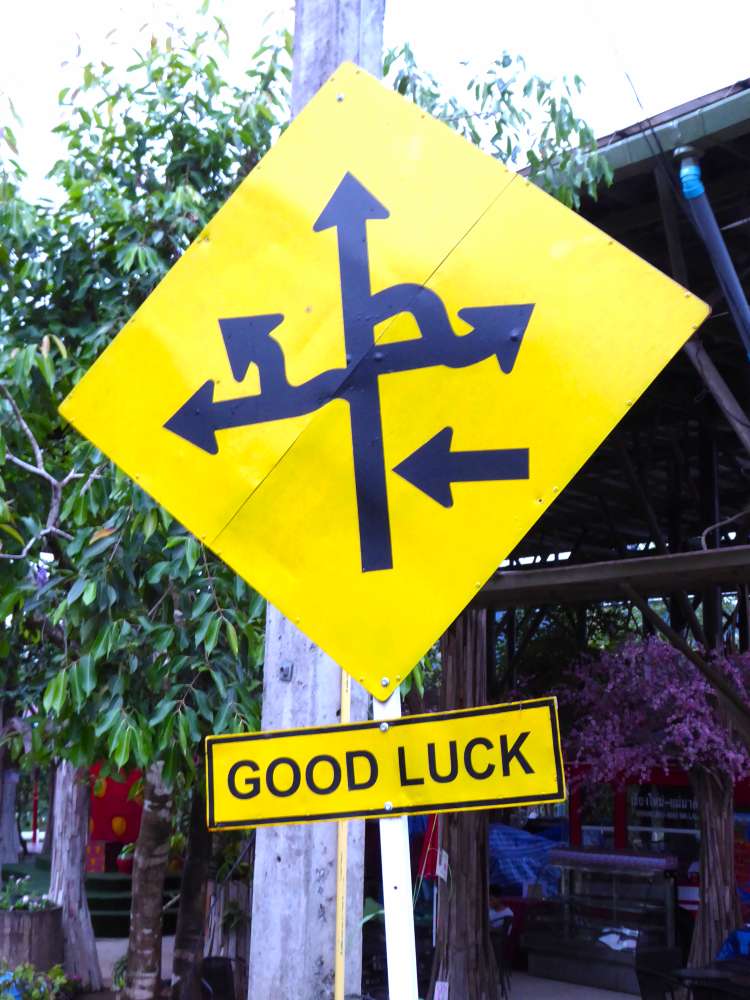
For confident riders, renting a scooter or motorbike in Chiang Mai and riding to Pai is one of the most rewarding ways to arrive. The road is fully paved and generally in good condition, with frequent viewpoints, cafés, and small towns along the way.
The ride usually takes 4 to 6 hours with stops, and turning it into a full day rather than rushing makes a big difference. This option isn’t ideal in heavy rain or poor visibility, but in good weather it’s an experience in itself rather than just transport.
There is also a public bus option, which is slower but slightly more comfortable for those who dislike minivans. Buses run less frequently and take longer, but they tend to be steadier on the road, which some travellers prefer. You can book buses and minivans on 12 Go Asia.
Once you arrive in Pai, getting around is very easy. The town itself is compact and walkable, but renting a scooter gives you the freedom to explore waterfalls, viewpoints, hot springs, and countryside roads at your own pace.
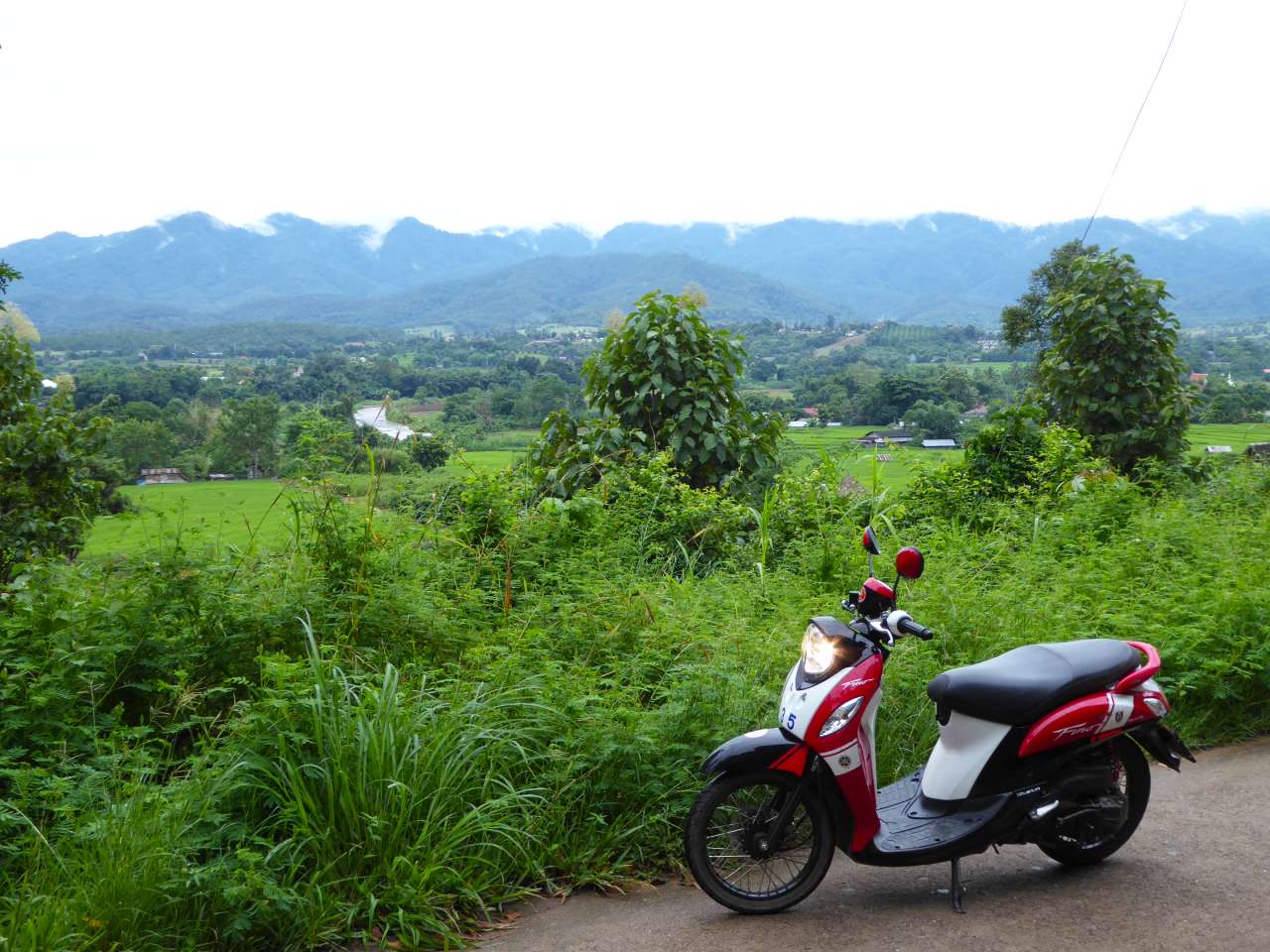
Scooter rental is affordable, widely available, and one of the best ways to experience Pai properly. If you don’t ride a scooter then taxis, songthaews and tours are available, though they’re less flexible for spontaneous exploring.
Pai also has an airstrip and small airport but, since Covid, there are very limited commercial flight options from Pai airport. Although there is talk about flights to Chiang Mai resuming in the future.
However you get to Pai, make sure you have travel insurance, especially if you plan to ride a scooter or motorbike and check that your insurance covers you for this. You also need to get an IDP (International Driving Permit) to drive in Thailand – police rarely check this in Pai but they do in other places.
No matter how you get there, the journey is part of the experience and arriving in Pai usually comes with a sense of adventures and relief. The road winds down, the air feels cooler, and the pace immediately slows – you’ve made it!
When to Visit Pai
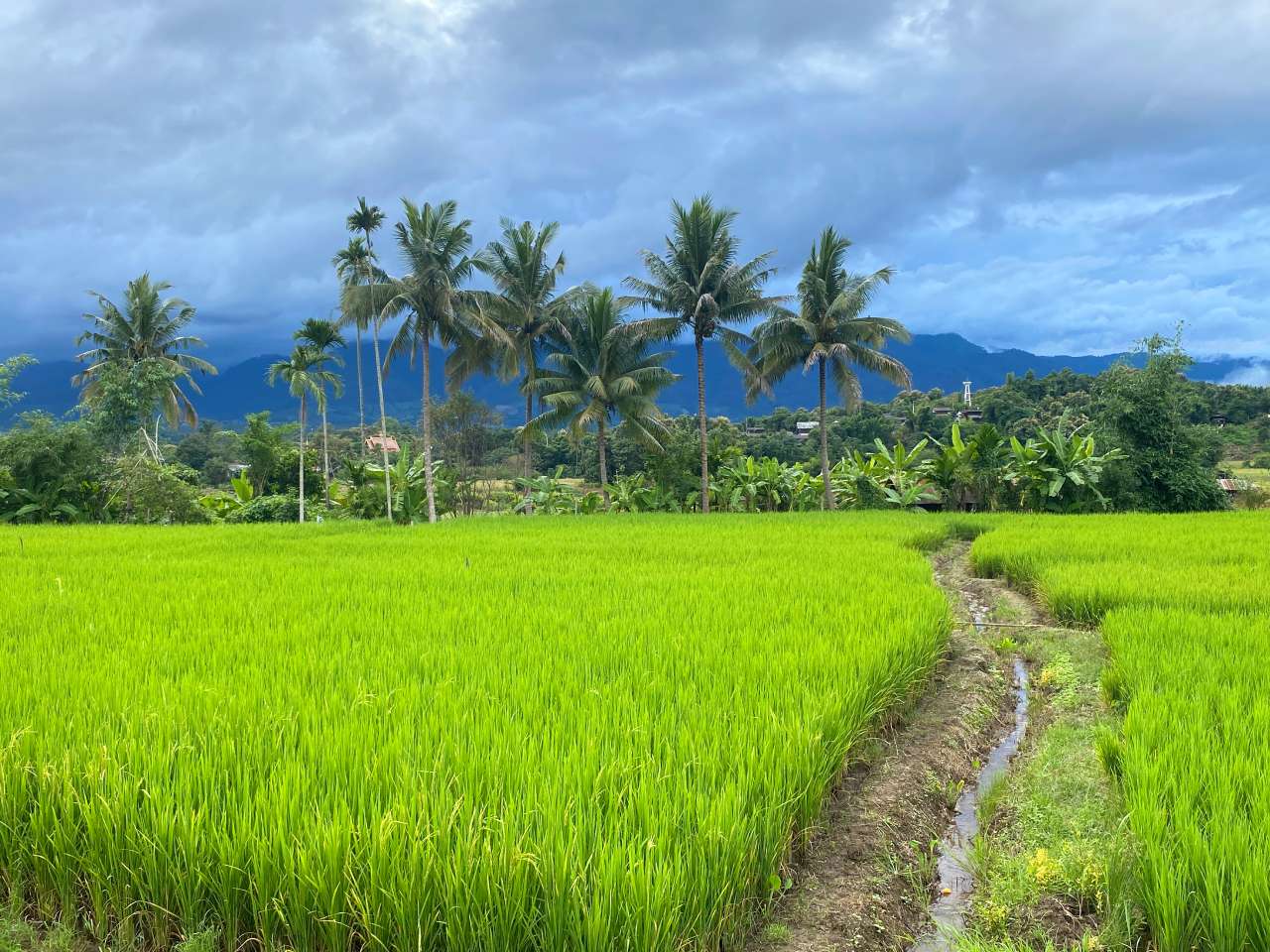
Pai can be visited year-round, but the season you choose has a big impact on weather, air quality, crowds, and the overall feel of the town.
The most popular time to visit Pai is November to February, during the cool, dry season. Daytime temperatures usually sit between 20–28°C (68–82°F), while nights can drop to 10–15°C (50–59°F), especially in December and January.
In winter, mornings are often crisp and misty, making this the best time for sunrise viewpoints and long motorbike rides. This is peak season/high season in Pai, so accommodation prices are higher and the town feels noticeably busier, particularly over Christmas and New Year.
March and April are the hottest months of the year, with daytime temperatures often reaching 30–38°C (86–100°F). This period also overlaps with northern Thailand’s burning season, when agricultural fires across the region can cause heavy smoke and poor air quality.
The burning season means that visibility at viewpoints can be limited, and some days feel uncomfortable for long periods outdoors, especially for those sensitive to air pollution. Pai is quieter at this time and prices are lower, but it’s worth checking air quality conditions carefully before planning a visit.
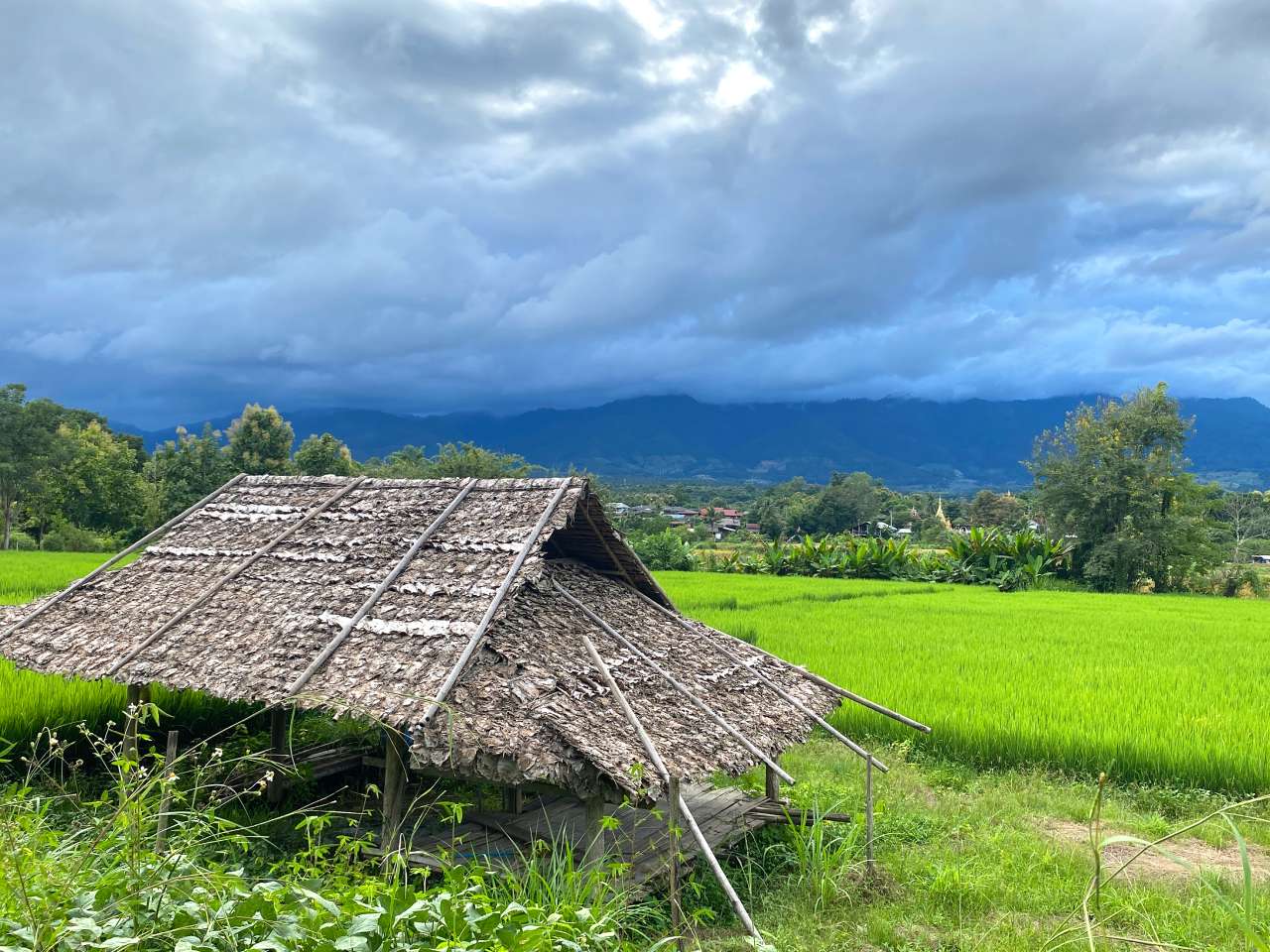
The rainy season runs from May to October, but it’s still warm in Pai with average daytime temperatures of 25–32°C (77–90°F). Rain usually comes in short, heavy bursts rather than all-day downpours, and there are still plenty of bright, dry hours.
The wet season is when Pai is at its greenest, waterfalls are flowing well, and the countryside feels alive. The town is less crowded, accommodation is better value, and the slower pace suits Pai particularly well. I’ve really enjoyed my trips to Pai in the rainy season as the scenery is so lush but stay flexible and aware of the weather conditions.
If you’re riding a scooter note that roads can be slippery after rain, so extra caution is needed – it’s not the best time to plan a road trip around Mae Hong Song but it’s good for getting cosy in a bungalow surrounded by nature.
For the best balance of pleasant weather, clearer air, and fewer crowds, late October, early November, and February are ideal shoulder months. Temperatures are comfortable, usually around 22–30°C (72–86°F), and Pai has its relaxed atmosphere without the intensity of peak season. Although, if you want to see the lush greenery it’s best to come in October/November just after the rains.
Final Thoughts on Pai
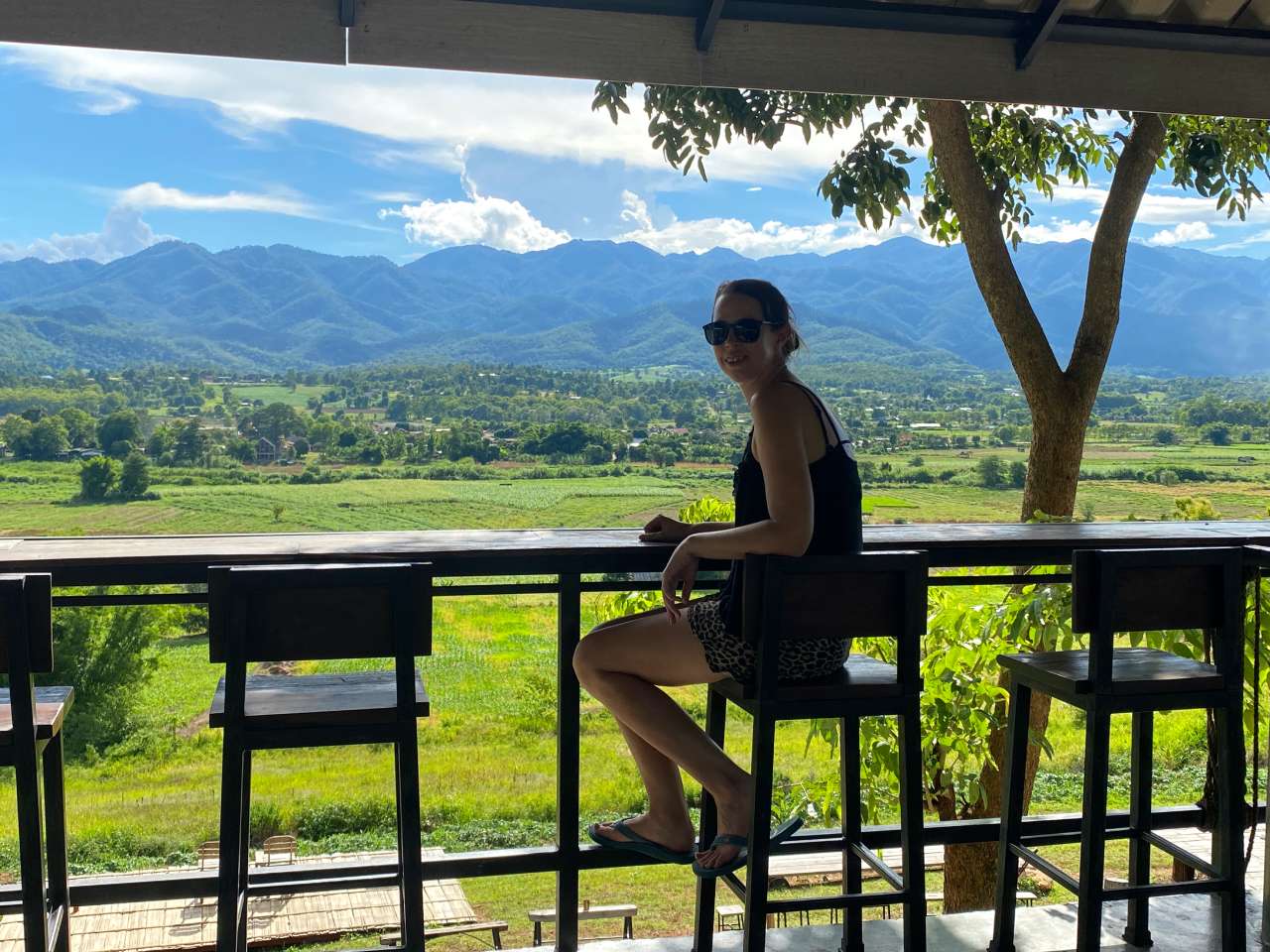
Pai is one of the most beautiful places to visit in northern Thailand, and it’s not just because of the stunning nature, waterfalls, hot springs and viewpoints – this little town also has a very special and unique vibe.
This is a place that rewards slow travel and spontaneous exploration. Most of my favourite cafés, bars, moments and conversations only became favourites because I stayed long enough to soak it all in and to have time to connect – both with nature, myself and the unique community here.
So, if you can, don’t rush Pai – give yourself a few extra days beyond what you planned. Pai has a habit of filling them for you.
Pai isn’t for everyone, if you’re looking for fancy resorts or places packed with famous tourist attractions, it might feel too slow but that’s part of its charm.
If you like places that encourage you to breathe, connect, and stay a little longer than planned, Pai has a way of getting under your skin.
Every time I leave, I’m already half-planning the next return. And that’s probably the best recommendation I can give
Read More Thailand Blogs and Travel Guides

12 comments
Thanks alot!!!
Very nice Information..
Thanks Sofia! 🙂 Glad it was useful
Went to Pai in 1997 and it was a wonderful laid back destination away from the seediness of Chang Mai & Rai. Now it is overrun with flash packers etc. and advertising like this spoils it all. I’m glad I’ve seen Thailand as it was and that I know the few pockets that are still in-touched by all this internet advertising and “oh how I travel free” bollocks. I’ve lived in Thailand for 20+ years and have seen the very quick erosion of values solely because of western travel and to promote “peaceful havens” etc. makes it all the more worse. Your not travellers, you only go to the touristy parts. Shame on you for earning a living denigrating and destroying another countries way of life.
Hi Kev, I agree with you on many points that you make. Pai must have been much nicer back then and when I visited I did think it was too touristy, sadly things change and I didn’t write this post to travel for free or to earn money – actually it’s a guest post written by another writer who wants to get some more experience and exposure for his work and help out some other travellers. Anyway, thanks for sharing your opinion.
Sorry that you feel that way Kev, but I am jealous you got to see Thailand in 97! It would have been very different but the only thing you can be sure of is that nothing stays the same
Its really wonderful posting and unique writing words for the blogs. so thank you so much for sharing your views .
Thanks Kunal, glad you liked the post 🙂
I’ve always wanted to visit Thailand, and after reading this great post, I definitely will. Thank you for so many informations.
Great! Glad you liked it – Thailand is an awesome place to travel hope you have a good trip
Amazing Blog! Thanks for sharing.
It’s an exciting blog. Anna, you did incredible research on Thailand backpackers. This blog provides instructive information which would be helpful for the traveller.
Thank you 🙂