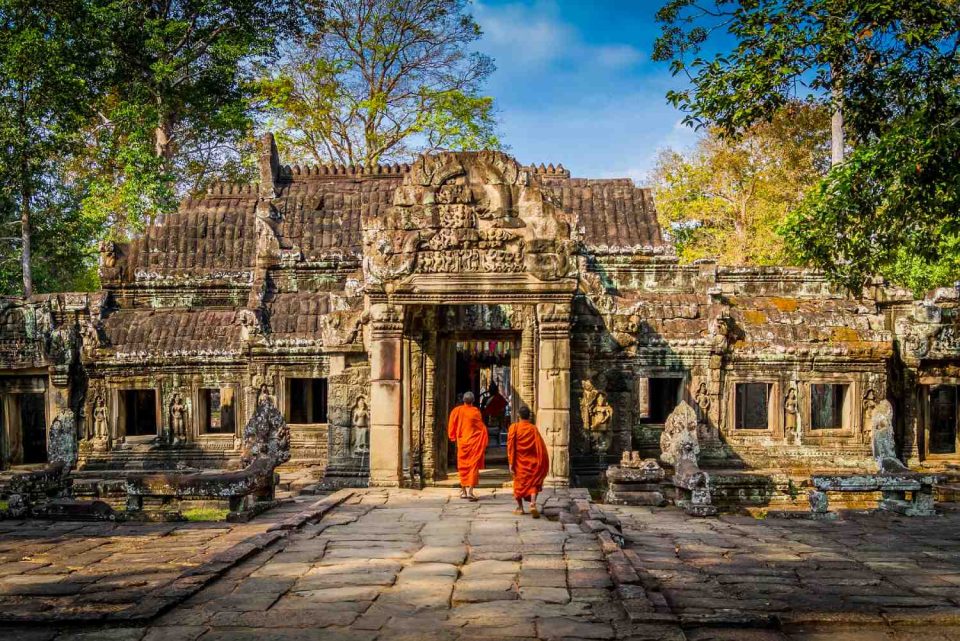
Visiting Angkor Wat is one of the very top things to do in all of Southeast Asia and one of the most stunning places I’ve ever seen! The sprawling, UNESCO listed Temples of Angkor in Siem Reap, Cambodia are undoubtedly one of the most incredible sights in the world and feature on many a traveller’s bucket list.
Angkor Wat is a magnificent sight, the crown of the once mighty Khmer Empire, the icon of the Kingdom of Cambodia, and the largest religious building in the world. Far from being lost to the jungle, now the Temples of Angkor now receive over 2 million visitors a year.
This does mean that the most famous temples are pretty crowded, which takes a bit away from the adventure and experience, but Angkor Wat is still totally worth visiting.

And there’s so much more to see than just Angkor Wat! There are so many temples to explore and the complex is so enormous that it’s still possible to avoid the crowds and find your own quiet corner.
I’ve visited Angkor Wat twice now so here’s my tips for visiting Angkor Wat and avoiding the crowds plus a mini Siem Reap Travel Guide that will help you get to know the nearby town of Siem Reap, how to get there and get around, where to stay and eat plus other things to do to help you make the most of your trip.
With a little research and planning you can still have that alone in the jungle, Indiana Jones and Tomb Raider experience you’ve been dreaming off.
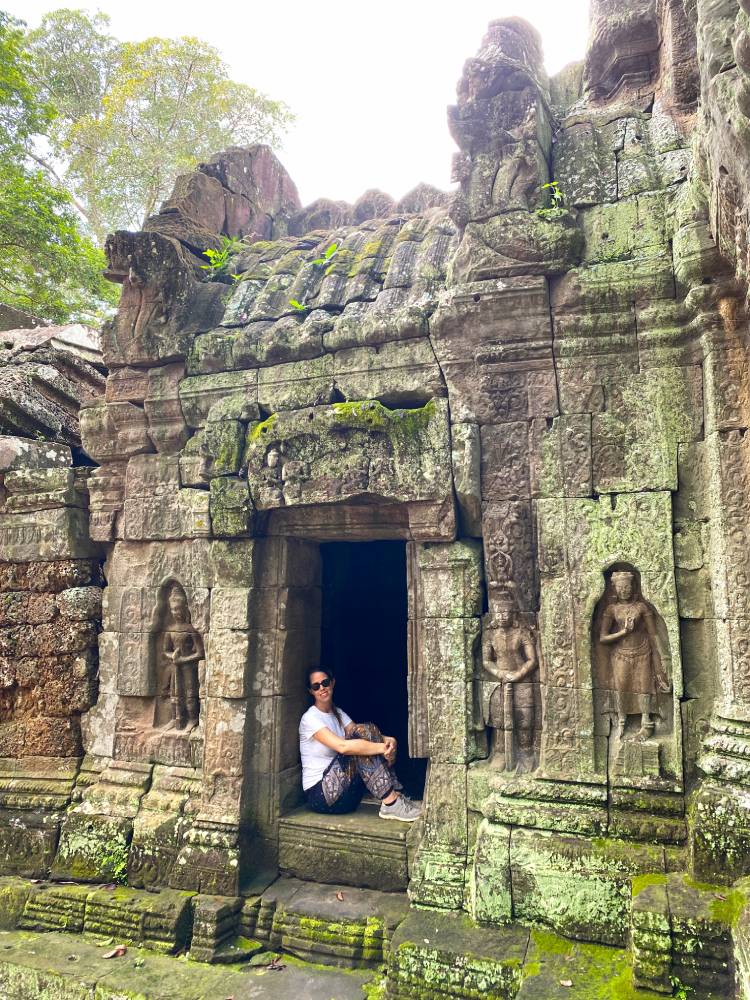
My Guide to Visiting Angkor Wat and Siem Reap
Where Is Angkor Wat?
Angkor Wat is located in north-western Cambodia, just outside the town of Siem Reap. The temple itself is part of the much larger Angkor Archaeological Park, an enormous complex of ancient cities, temples, reservoirs and causeways that once formed the heart of the Khmer Empire.
While Angkor Wat is the most famous and recognisable temple, it’s only one small part of the wider site. The Angkor complex covers an area of over 400 square kilometres, making it one of the largest religious and archaeological sites in the world. Within this vast area are dozens of major temples and hundreds of smaller ruins scattered through forest, fields and villages.
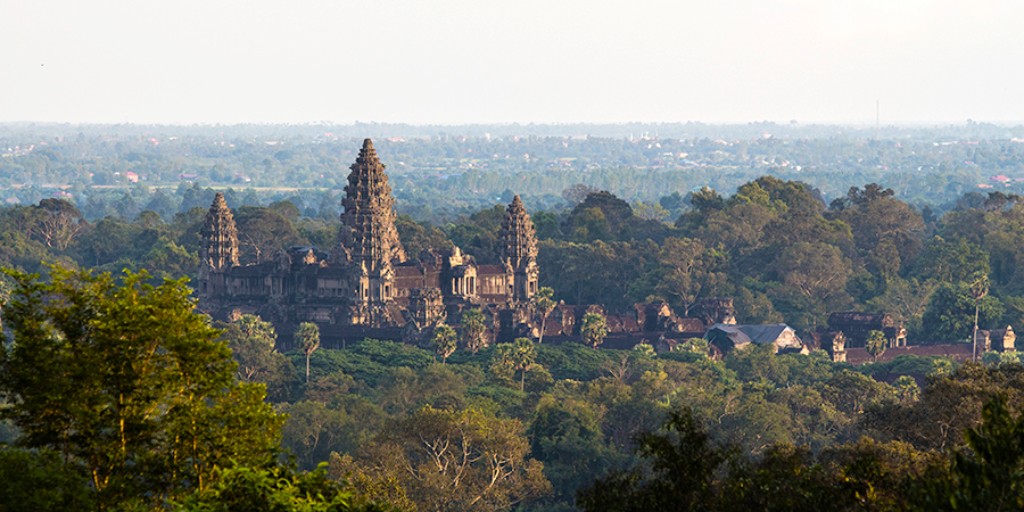
The ideal place to base yourself is in Siem Reap, which sits just south of the park and acts as the main gateway to Angkor. From town, it takes around 15 to 20 minutes by tuk tuk to reach Angkor Wat, with other major temples such as Angkor Thom and Ta Prohm located slightly further inside the park.
What often surprises people is how spread out everything is. Angkor isn’t something you explore on foot in one go; getting between temples requires transport, whether that’s a tuk tuk, bicycle or car. This sheer scale is part of what makes Angkor so impressive, but it does mean that your visit requires some planning to make the most of it.
Angkor Wat is just one highlight within a much larger landscape. It’s a whole ancient world, slowly reclaimed by the jungle and still revealing new details the more time you spend exploring it.
How to Get to Angkor Wat and Siem Reap
Getting to Angkor Wat is pretty straightforward, and almost everyone approaches it via Siem Reap, which is the main gateway town for the temples.
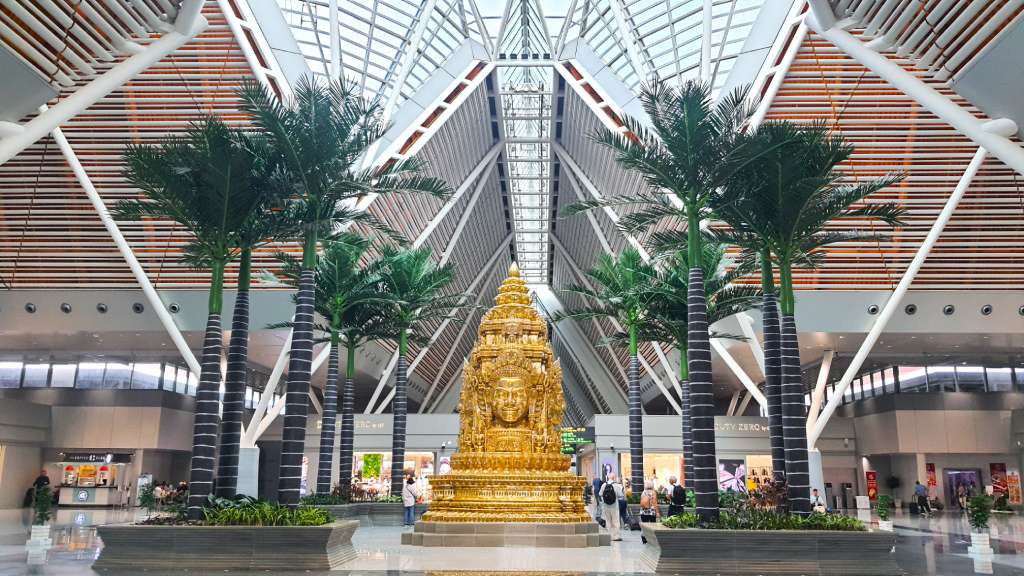
There is a new international airport (Siem Reap Angkor International Airport SAI) which offers the easiest and fastest option to reach Angkor Wat. There are direct flights from major hubs around Southeast Asia such as Bangkok, Singapore, Kuala Lumpur, Ho Chi Minh City and Hanoi, making it simple to slot Angkor Wat into any Southeast Asia adventure.
From the new airport, it takes about 1 hour to travel to Siem Reap town center. You can either take the bus, haggle for a taxi or book a shared or private airport transfer.
If you’re already in Cambodia you can travel overland as Siem Reap is well connected by bus, it takes about 6 hours from Phnom Penh by road.
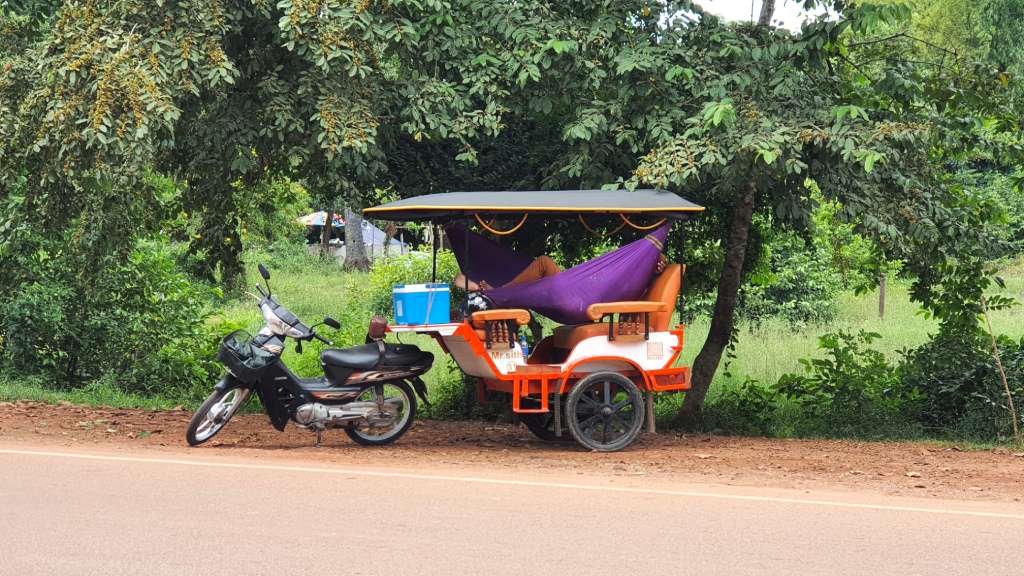
You can also reach Siem Reap by crossing the border from Thailand via Poipet, which is a popular route from Bangkok. The border crossing itself can be a bit chaotic, but once you’re through, transport onwards to Siem Reap is easy and affordable. You can book your bus on 12Go Asia.
Once you arrive in Siem Reap, everything becomes very easy. The town is compact, affordable, and geared towards travellers. Angkor Wat itself is only about 15 minutes away from Siem Reap town and transport is cheap and plentiful with tuk tuks and guided tours being the most popular way to explore the temples.
One of the best ways to explore the temples and avoid the crowds is with a private guided tour like this top rated one.
My Tips for Visiting Angkor Wat and Avoiding the Crowds
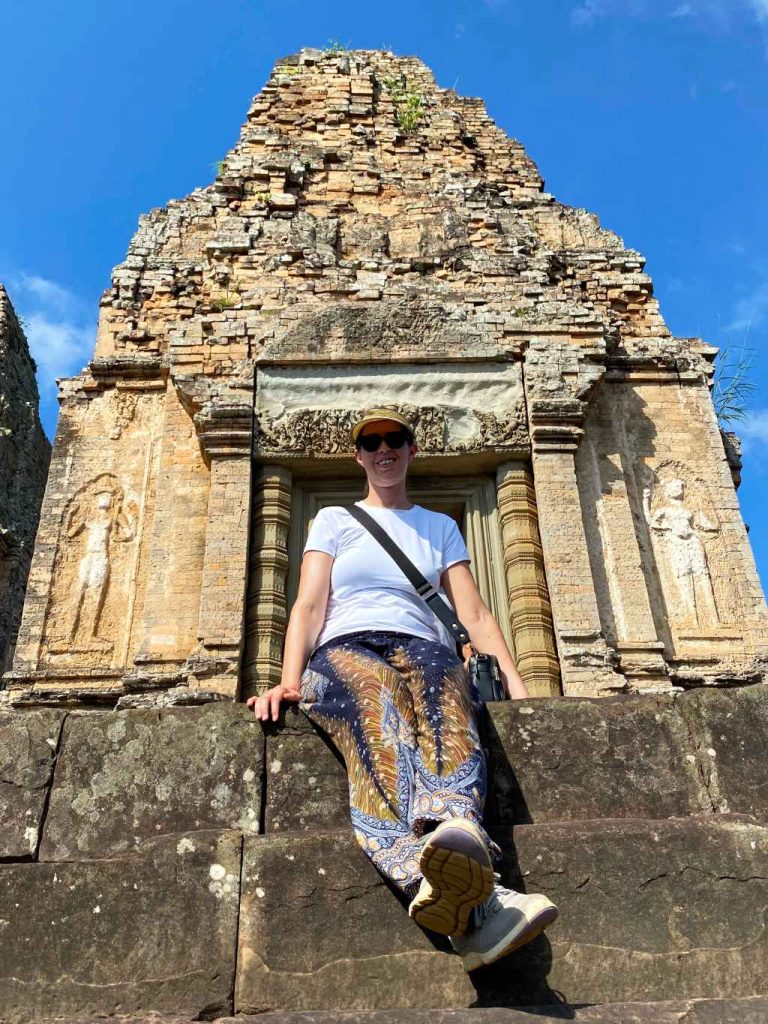
While Angkor Wat is always a stunning sight, there are some ways to make your visit easier and to avoid the worst of the crowds. Here’s my tips after visiting twice.
Go in the off season
The best time to visit Angkor Wat is in the cooler winter months of November to March, however this is also the most crowded time.
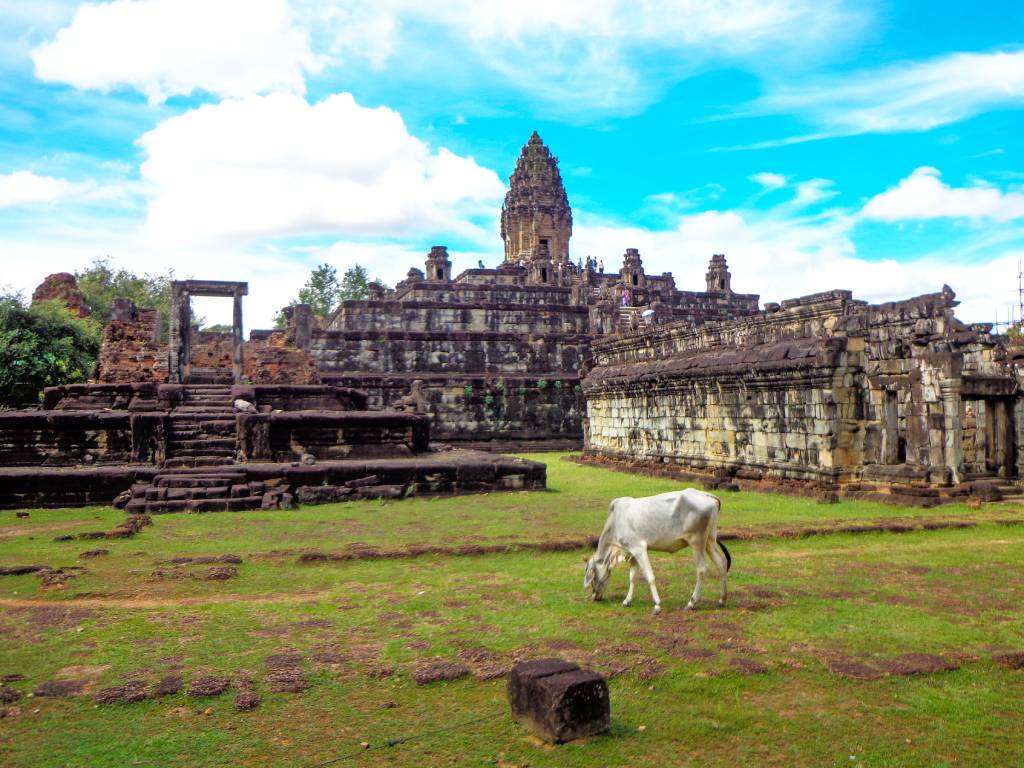
April and May are unbearably hot but you could visit in the rainy season (June – Oct) like I did and enjoy cheaper prices, less crowds and amazingly luscious green countryside!
The weather kept most of the tourists away but didn’t disrupt our sightseeing too much, it hardly ever rained in the morning and by the afternoon the rain was a refreshing respite.
Arrive Early

The difference between visiting a crowded temple and a blissfully empty one basically comes down to a combination of the right timings and the right sites.
Seeing the sunrise over Angkor Wat is a spectacular experience, but don’t be surprised that everyone else has had the same idea!
If you’re set on seeing sunrise at Angkor Wat then arrive early to get a good view point or sit further away or to the side to get a bit of peace from the crowds near the ponds. To save time you can now buy your Angkor Pass ticket online.
Pin this

Most tourists go back to their hotels for breakfast after sunrise so just after sunrise is the actually the best time to explore Angkor Wat!
If you’ve already seen the sunrise at Angkor it’s still worth getting there early ( the complex opens at 5am and closes at 6pm) and starting to explore the other temples in the flattering morning glow without the crowds and heat.
Lunchtime is also a good time to visit some of the busier temples as many tourists will have gone off to have lunch but it will be hot. For sunset avoid Phnom Bakheng as it’s unbearably crowded and check out Angkor Sunset Finder for suggestions of alternative places to enjoy the sunset.
Go the opposite way round
One way to avoid the crowds is simply go the other way round! Most tourists will stick to the same route – the small circut or the grand circut so by mixing up your route a bit or deviating off the main path or road you can sometimes find yourself all alone.
You can also avoid the main entrance of a temple and going in a different direction around the same temple (most have more than one entrance) you should be able to escape some of the crowds.
Explore some of the less popular temples
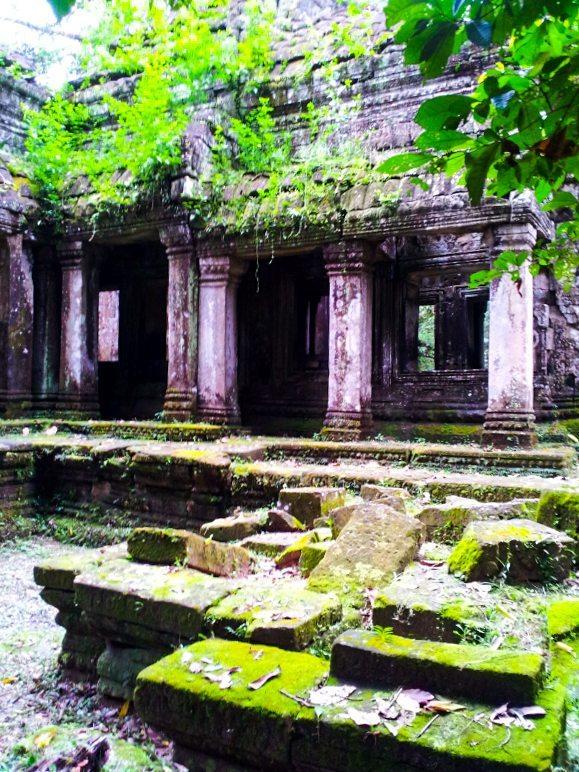
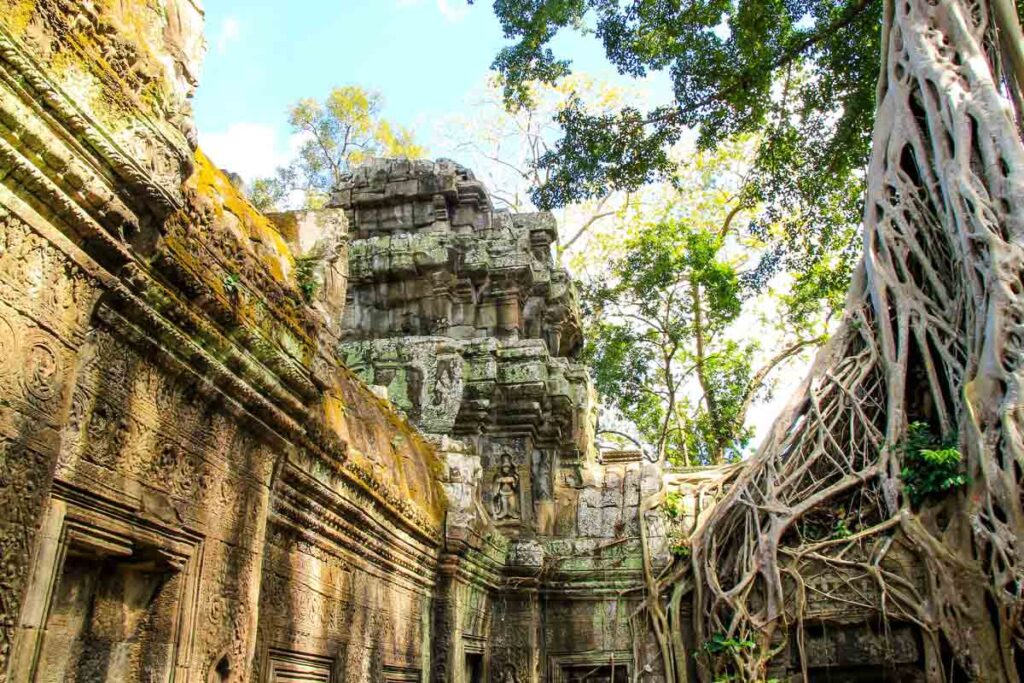
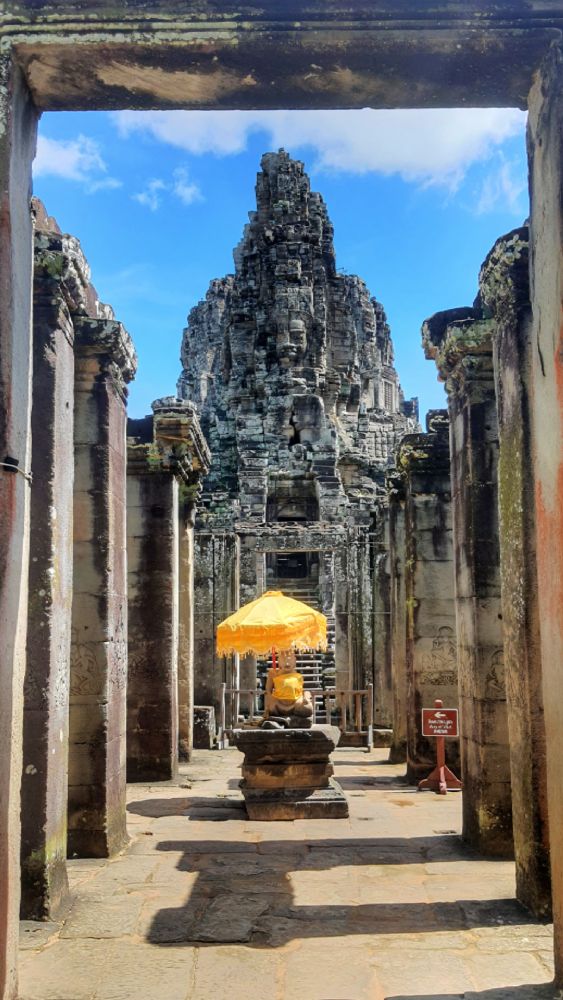
There are so many temples in Angkor but most tourists will try to rush around in one day ticking off the big, famous attractions of Angkor Wat, Ta Phrom (the tomb raider temple) and Bayon (with the huge faces.)
But there’s so much more to see and some of my favourite memories are sitting alone in the mossy green ruins of an unknown temple surrounded by the jungle far from the crowds at the more famous temples.
Travelfish also has a good article on how to avoid the crowds which goes more in depth into the exact timings and sites you should aim for or avoid. See it here – How to avoid the crowds at Angkor
Take your time
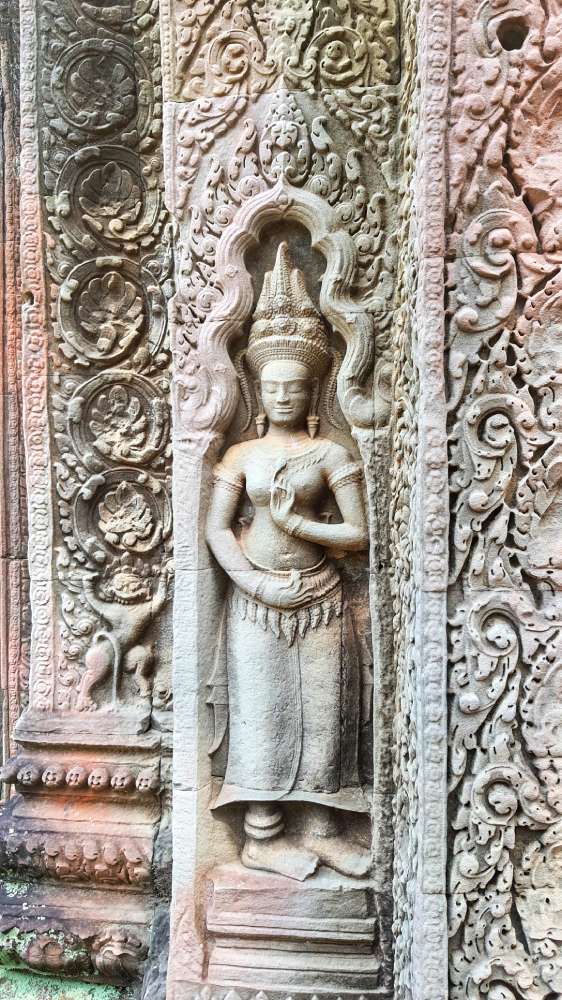
Angkor wasn’t built in a day – and you won’t be able to see it all in one day either!
The Angkor temples are located near to the town of Siem Reap in Cambodia which is well set up for tourists and has many hotels, accommodation options, restaurants, bars and other activities so you can stay for a few days or even a few weeks and not get bored.
So don’t even think about spending only one day at Angkor Wat, even 3 days wasn’t enough for me! And don’t think that once you’ve seen one temple you’ve seen them all because there is a huge variety of styles and levels of decay that mean every temple has something different to see.
I recommend getting at least the 3 day Angkor pass (US$62) and spending a week in Siem Reap if you can and split the 3 day pass across a week. There is so much to see but temple fatigue can set in quickly.
There are lots of things to do in Siem Reap so alternate your days visiting Angkor Wat with days spent relaxing in Siem Reap, having a massage or Khmer cookery class, visiting the Angkor national museum or going shopping. You can also explore the idyllic countryside by horse back, visit the bird reserve or floating villages at Tonle Sap nearby, watch a classical dance or just have a night out on pub street.
Taking your time will make visiting Angkor Wat even more amazing and enjoyable if you don’t try to cram it all in at once.
Hire a tuk tuk or use a local guide
The temple complex is just massive. I really can’t over estimate how big it is and how much there is to see when visiting Angkor Wat. It’s a few kms outside of Siem Reap and if you were to go by bicycle or walk in the tropical heat then you will probably wear yourself out before even reaching the first temple!
A popular way to visit the temples is with a group tour on an air conditioned mini bus. It’s a convenient way to travel to the temples, a guide really helps to bring the history to life, and the air conditioning with be very welcome after all exploring the temples, but you could end up stuck in a large tour group totally unable to avoid the crowds.
I prefer doing things to my schedule with a private tour with a knowledgeable guide that knows the best places to go and allows the flexibility to go at my own pace and avoid the crowds.
If you’d like to enjoy the comfort of an AC car, a proper guide, and get your tour organised in advance then Viator is the best places to book. Unfortunately, there’s a lot of scams in Cambodia so I recommend using these trusted international platforms and reading reviews first before booking. This full day private Angkor tour receives rave reviews so you know you’ll be in good hands.
If you’re on a smaller budget, just want transportation, and don’t mind leaving the arrangements until you arrive in Siem Reap then you can always hire a tuk tuk and driver for the day from about $20, depending on your negotiation skills. The tuk tuk drivers know the complex well and can advise you on which temples to see, and possibly how to dodge the crowds, but you can also make your own itinerary.
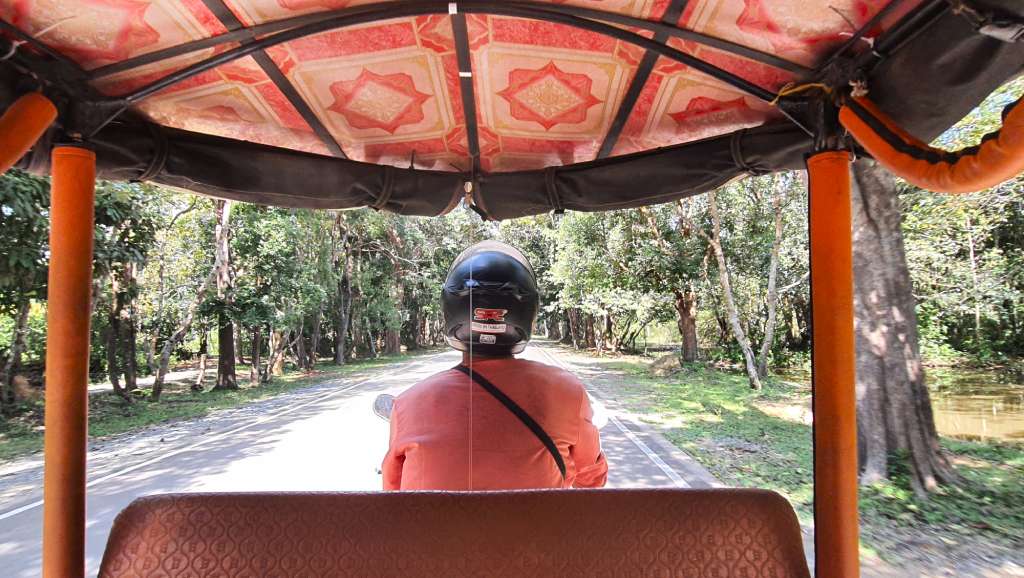
Once you have transport then it’s also easier to visit some of the further away temples which have less crowds. Just be aware they are just drivers and their English skills are limited. They don’t guide you through the temple – you’re on your own there.
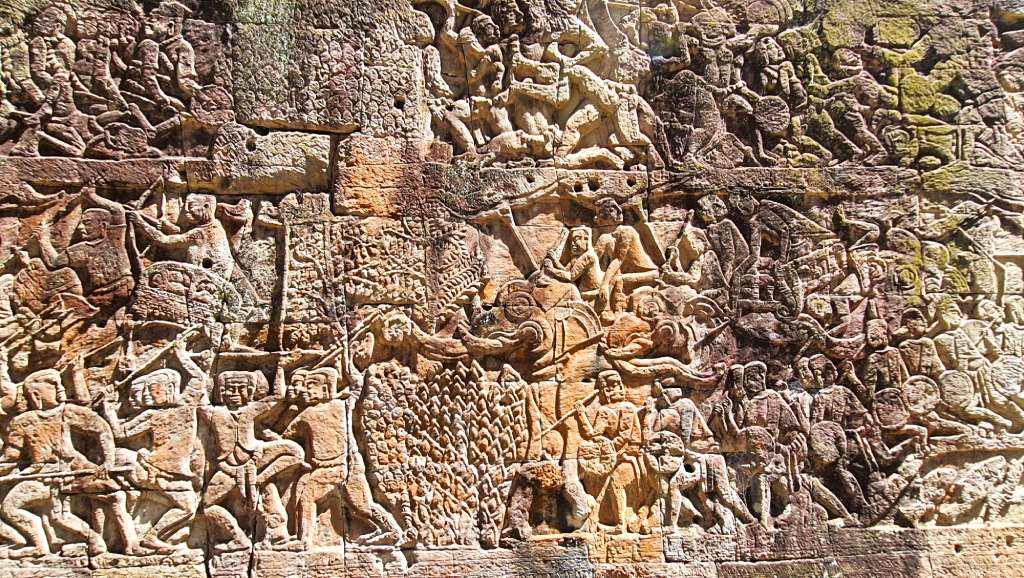
If you can’t afford a guide then at least invest in a good guidebook – the more you understand more about the temples, sculptures and carvings and the Angkor Empire will give more depth, interest and meaning to your visit.
For example, did you know that Angkor Thom was the largest city in the pre industrial world. The Khmer’s were incredibly advanced for their time and learning how and why they built these temples is fascinating and gives a better insight into an amazing ancient culture.
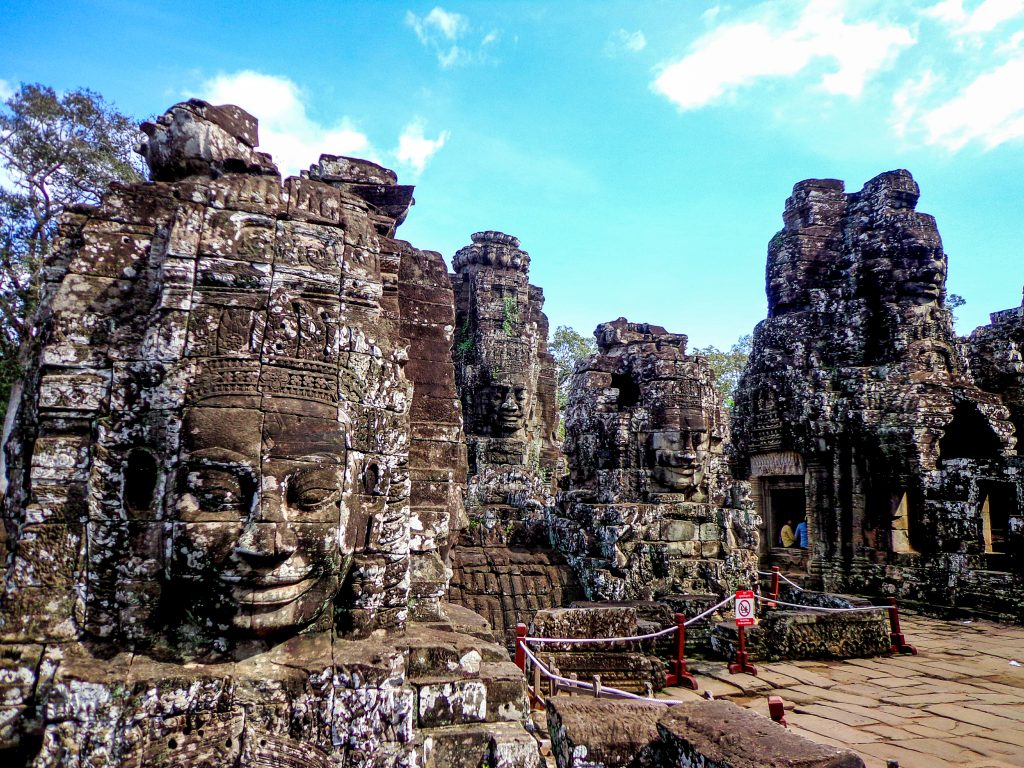
Come prepared for temple climbing
When visiting Angkor Wat it’s best to wear sturdy shoes, take plenty of water and protection from the sun. The many uneven surfaces and huge, steep, temple mountains to climb which will feel precarious in flip flops.
It’s hard work exploring these massive temples and climbing up the steep steps in the sticky, jungly heat and it’s very easy to get dehydrated. Take way more water than you think you will ever need.
Cover up and follow Angkor’s Code of Conduct
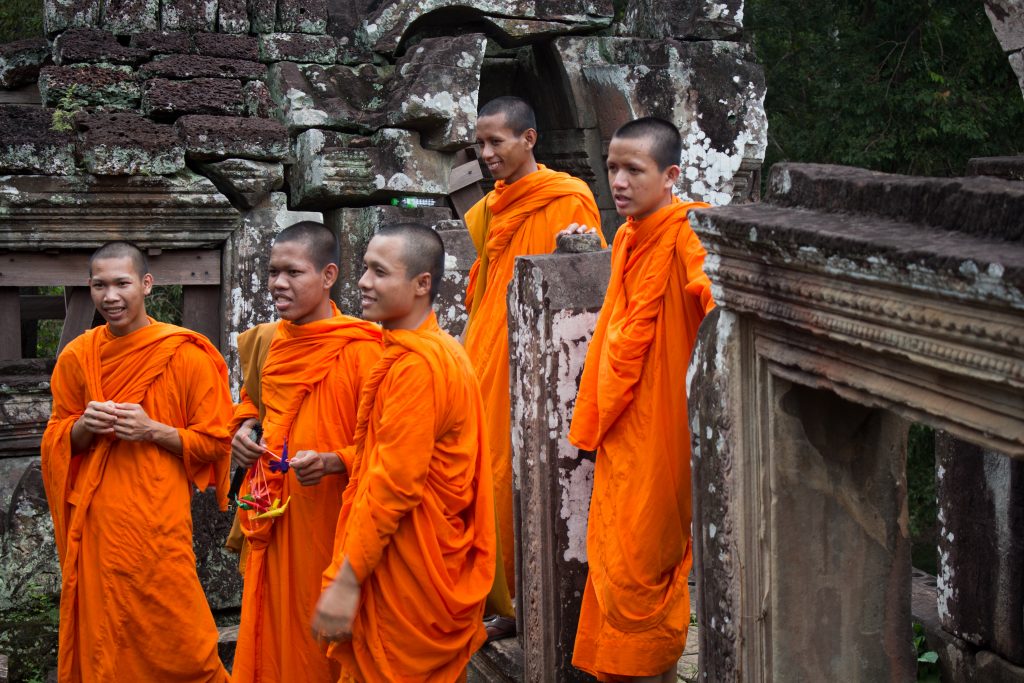
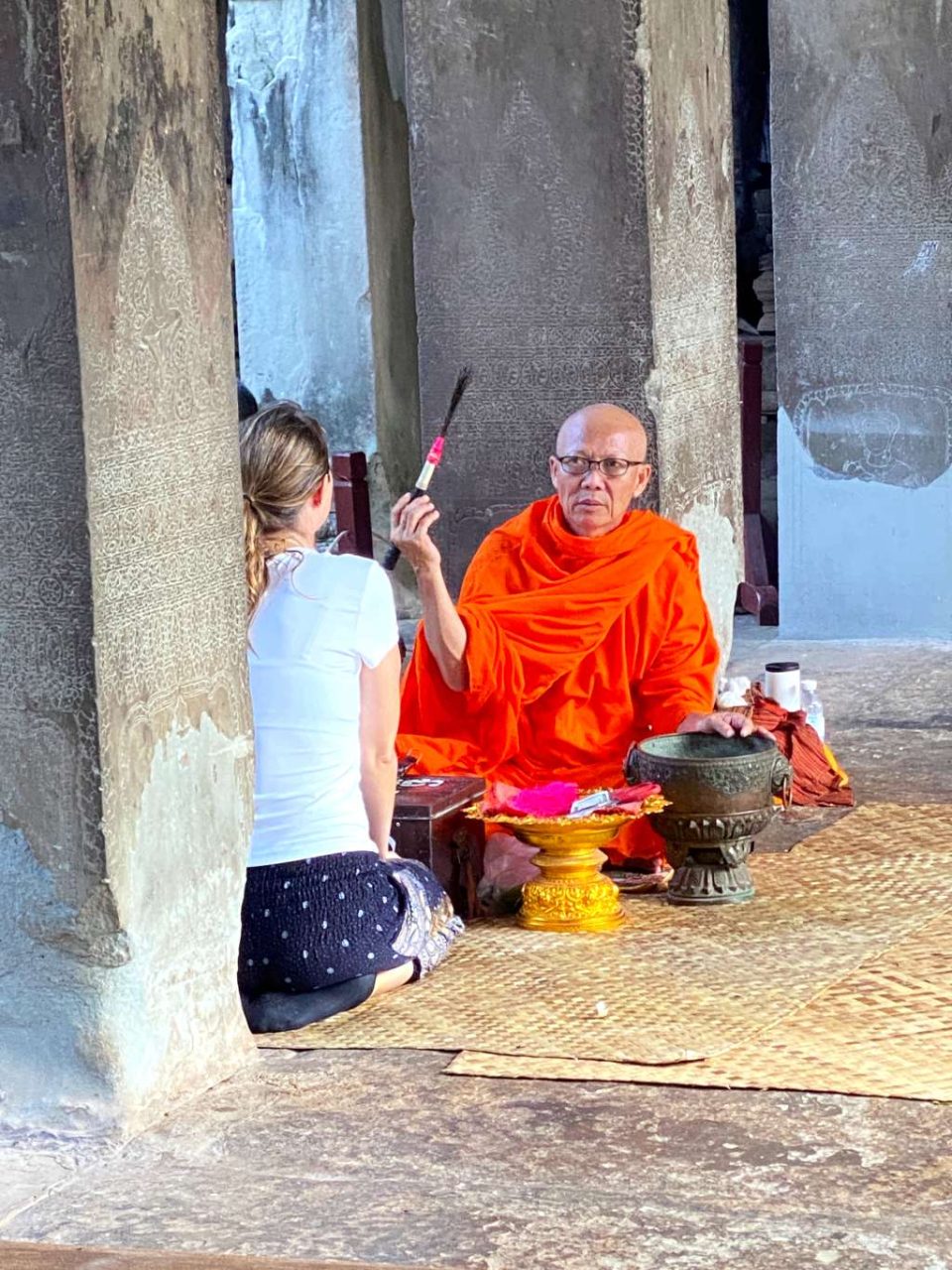
While some temples are in a state of ruin they are still a highly sacred and holy site to Cambodians and are often visited by monks so you need to dress respectably when visiting Angkor Wat – avoid sleeveless tops, short or revealing clothing and follow Angkor’s Code of Conduct.
This can be uncomfortable in the heat so try wearing light, loose cotton or linen pants (elephant pants work well!) or a long skirt and something that covers your shoulders like a T-shirt or lightweight shirt with sleeves.
Whilst you may get away without covering up in some temples, some temples will not allow you in if you are not dressed modestly and be warned that sometimes even a shawl or scarf may not be acceptable so its better to wear a top that covers your shoulders.
Try to ignore the beggars and touts.
One of the low points about visiting Angkor Wat is the many children, beggars and touts who work around the temples selling postcards and trinkets or begging for money.
While this is a heart breaking and controversial subject, giving to them will only encourage them to work in this way instead of getting an education and so keeps them in poverty in the long run.
Most of the Cambodian people are lovely but around the temples there are some that might try and scam you and the milk scam is a common one. There are many NGOs in town that you could support instead.
Manage your expectations and stay flexible
Whilst you can’t ever expect to be alone at sunrise at Angkor Wat it’s a sight you’d be crazy to skip and one that’s worth battling the crowds for. Luckily it’s a huge complex so there are still plenty of ways to avoid the crowds and enjoy this magnificent sight.
With these tips in mind you should be able to plan an amazing visit to Angkor Wat, avoid the crowds, and experience the magic of Angkor in peace.
Visiting Angkor Wat is truly an incredible experience that cannot be missed, don’t let the crowds, the steep steps, or the heat put you off seeing these amazing temples – it’s so worth it!
And don’t just rush off after you see the temples, keep reading for more things to do in Siem Reap and tips on where to stay, eat and drink.
Beyond Angkor Wat – Other Things to Do in Siem Reap

While Angkor Wat is the main reason most people come to Siem Reap, it’s well worth setting aside some time to explore beyond the famous temples.
Mixing in a few other activities and experiences makes the whole trip feel far more balanced and rewarding and gives you a better understanding of the fascinating country of Cambodia.
Here’s some more things to do in Siem Reap beyond the temples of Angkor:
Explore Siem Reap Town and the River Area
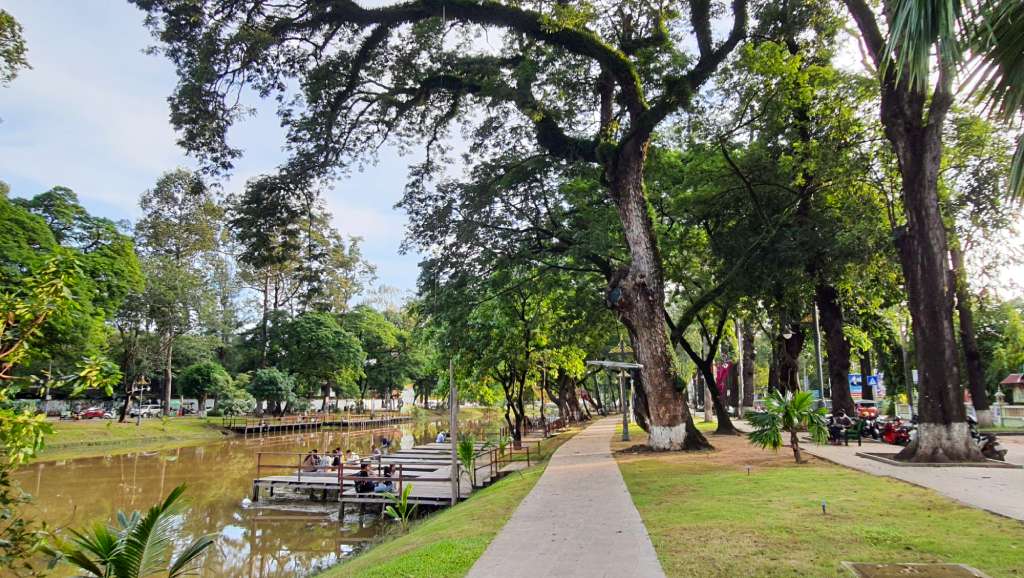
Siem Reap itself is a pleasant place to wander, especially around the river. I like spending an relaxed afternoon here, popping into cafés, browsing the market and just walking along the water.
The town has a relaxed, slightly bohemian feel during the day that is ideal for exploring after you’ve done the Angkor temples. It’s also interesting to pop into the town’s more modern temples that are still in use like Wat Preah Prom Rath, Wat Damnak and Wat Preah An Kau Saa which are easily combined with a river walk.
Visit the Royal Residence and Gardens
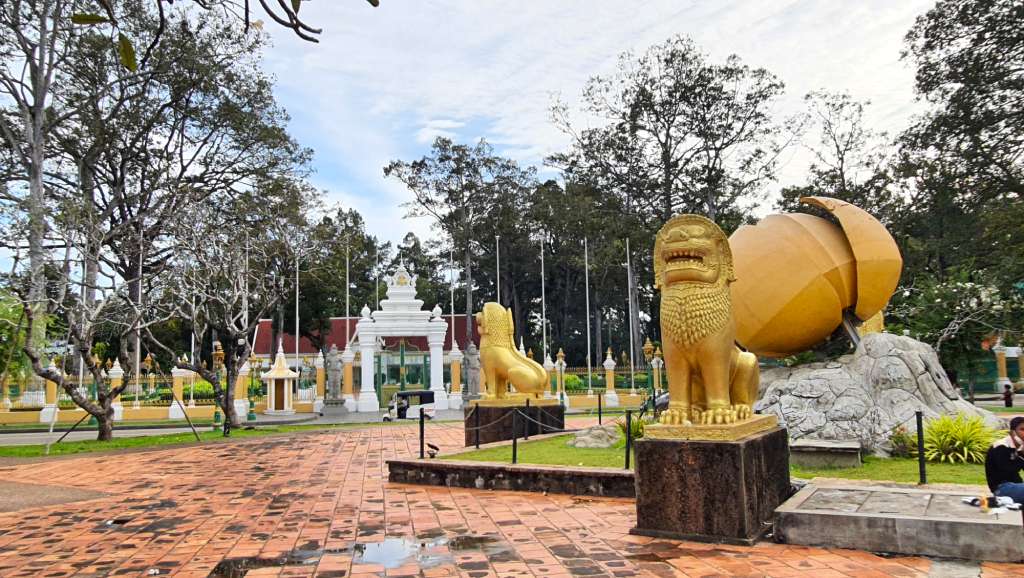
Another place in town worth a look is the Royal Residence of Siem Reap, which serves as the King’s official residence when he visits the region. It’s located right in the centre of town by the river.
While you can’t go inside the palace buildings themselves, the surrounding Royal Gardens are open to the public and make a pleasant place for a quiet stroll. The gardens are well kept, dotted with large trees, and home to a small shrine and colonies of fruit bats that hang dramatically from the branches overhead, especially towards dusk.
It’s not a major sightseeing attraction, but it offers a glimpse into contemporary Cambodia and provides a calm, local-feeling space right in the middle of town.
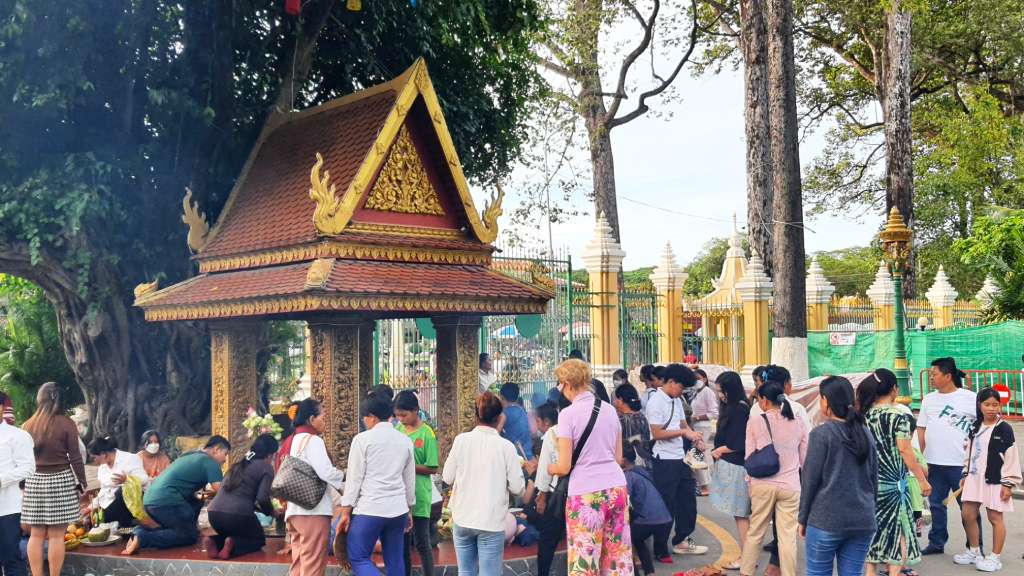
Just nearby, you’ll also find Preah Ang Chek Preah Ang Chorm Shrine, an important local temple where Cambodians come to pray and make offerings. Visiting in the late afternoon, when incense fills the air and locals gather to pay their respects, gives you an insight into Cambodia’s everyday spiritual life beyond the ancient stones of Angkor.
Visit a Floating Village on Tonlé Sap Lake
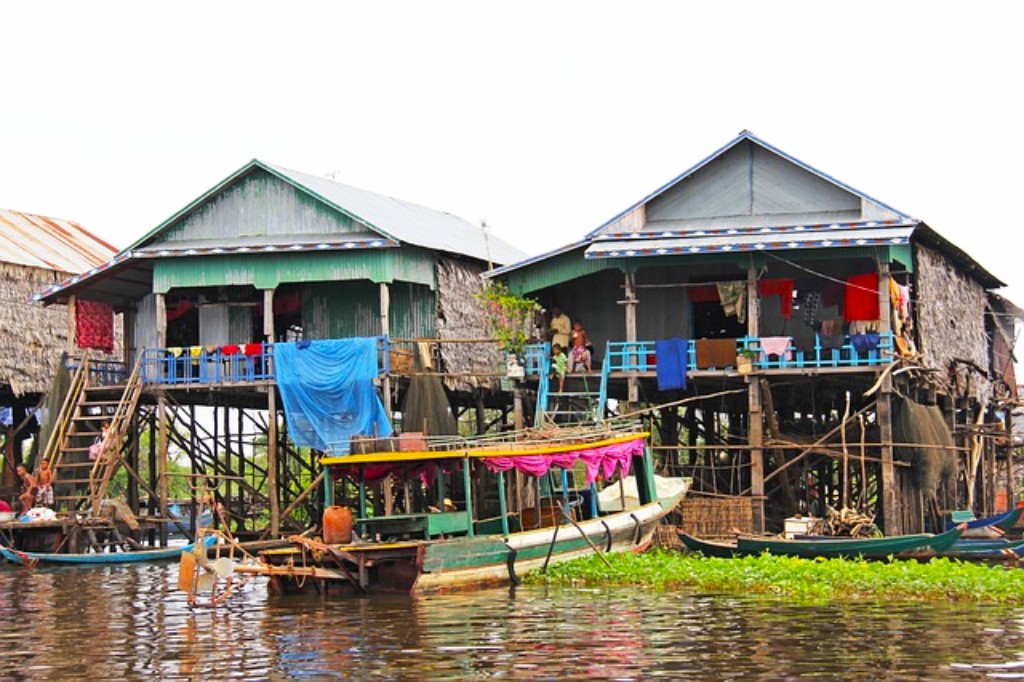
A trip to Tonlé Sap Lake offers a very different perspective on life in Cambodia. Several floating villages sit on the lake and surrounding waterways, where homes, schools and shops are built on stilts or floating platforms that rise and fall with the seasons.
It’s an eye-opening experience and a good way to understand how closely daily life here is tied to the water. I’ve heard about scams at the floating village so I recommend visiting with a responsible guided tour that focuses on learning rather than spectacle. This Floating Village Tour visits a village at sunset and has great reviews.
Join a Cambodian Cooking Class
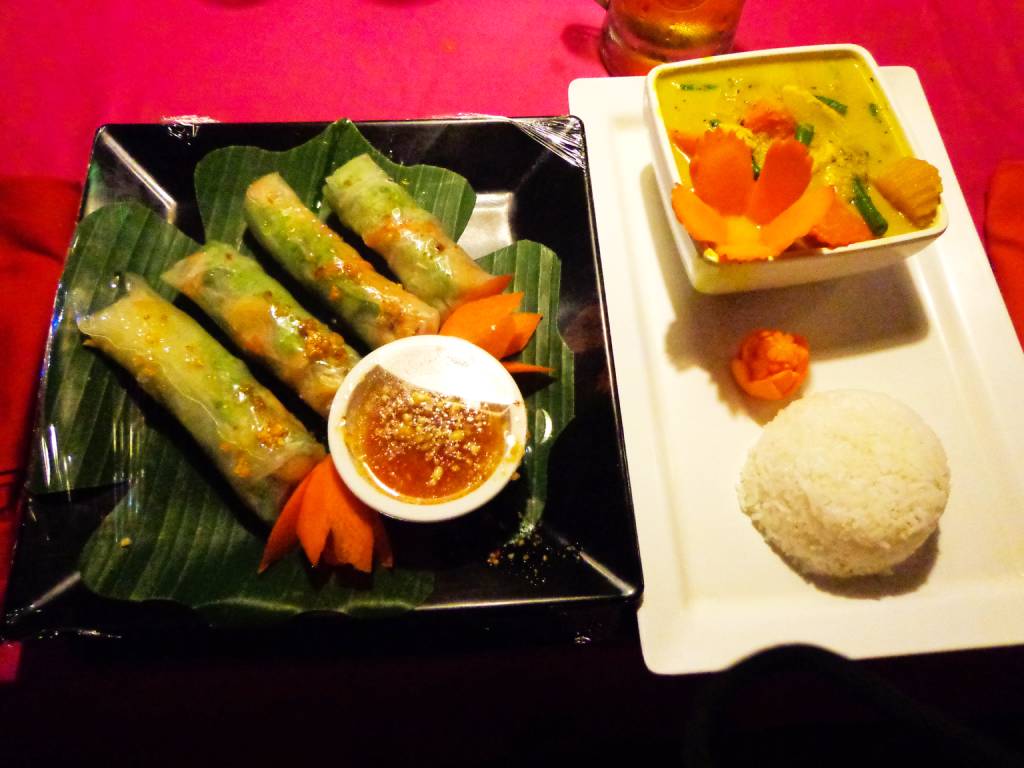
If you’ve enjoyed Khmer food while you’re in town, taking a cooking class is a great way to go a bit deeper and learn how to make your favorite dishes yourself – mine were fish amok with rice and spring rolls.
Many cooking classes include a visit to a local market to pick fresh ingredients before heading to an open-air kitchen, where you’ll learn to prepare classic Cambodian dishes
The Khmer cooking class I did took place at a local’s home. It’s a relaxed, hands-on experience and a nice way to spend half a day and you’ll leave with recipes you can actually recreate at home.
Visit Kulen Mountain and Waterfall

For something different after days of temple hopping, take a half or full day trip to Phnom Kulen National Park, often simply called Kulen Mountain, only 1 to 1.5 hours drive from Siem Reap.
Phnom Kulen is considered sacred in Cambodia and is believed to be the birthplace of the ancient Khmer Empire. The main draw is the waterfall, which cascades into a large natural pool where you can swim and cool off. It’s popular with local families at weekends, so if you prefer a quieter experience, visiting midweek or earlier in the day is a good idea.
There’s more here than just the waterfall, though. One of the most fascinating sights is the “River of a Thousand Lingas,” where intricate carvings are etched into the riverbed beneath flowing water. This landscape was sacred long before Angkor Wat was built!
Higher up the mountain, you’ll also find a large reclining Buddha carved into sandstone, which remains an active place of worship. The atmosphere here feels very different from Angkor — less monumental and more spiritual, with local pilgrims coming to pray and make offerings.
This full day Kulen Trip includes transport in a shared minibus, entrance fees and a picnic lunch.
Spas, Massages and Downtime
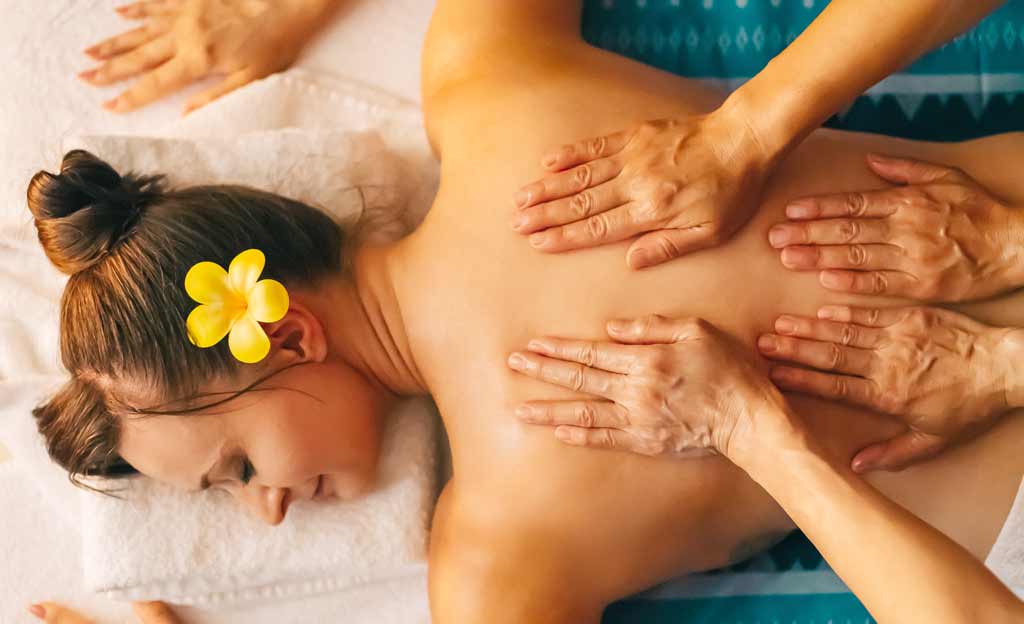
After multiple early mornings and long days walking around temples, I always build in some proper downtime in Siem Reap. Exploring Angkor means early alarms, dusty paths, lots of steps and hours on your feet, so scheduling a massage or spa afternoon is a must.
Siem Reap has everything from simple, affordable foot massages to full spa packages with scrubs, facials and aromatherapy treatments. Prices are generally very reasonable compared to Thailand or Bali, especially considering the quality.
If you’re looking for somewhere a little more fancy, Bodia Spa is one of the most highly rated options in town with beautifully designed treatment rooms and signature Khmer-inspired treatments that use locally sourced ingredients.
For something more budget-friendly, there are plenty of clean, well-reviewed massage places around the river and town centre offering traditional Khmer massage and reflexology. Even a simple one-hour foot massage after a sunrise visit to Angkor Wat can make a huge difference.
Explore More Temples Beyond Angkor
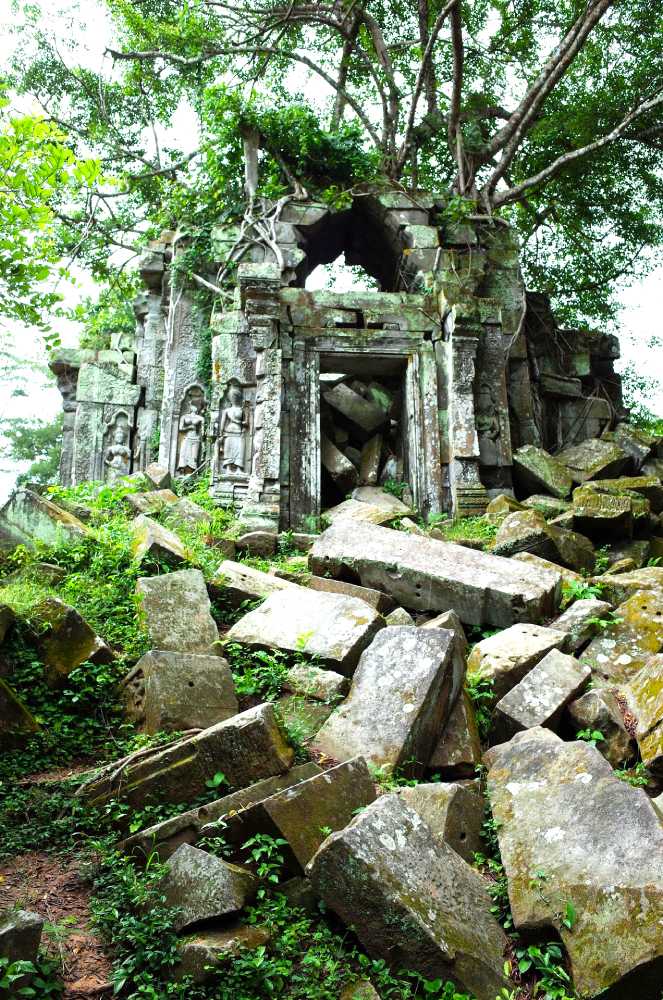
After a couple of days exploring the main Angkor circuit, it’s easy to feel like you’ve “done the temples” but there’s far more to discover beyond the headline sites. Stepping outside the main Angkor Archaeological Park gives you a quieter, slower experience and helps you to avoid the crowds.
Some of the best temples to visit beyond Angkor include:
Wat Thmei (also known as Wat Thmey) is a good starting point if you’re interested in Cambodia’s more recent history. This peaceful pagoda complex contains a memorial stupa dedicated to victims of the Khmer Rouge era and provides a sobering reminder of the country’s recent history.
If you’re happy to venture a little further, Phnom Krom sits on a hill overlooking the countryside and offers wide views across Tonlé Sap Lake. The temple itself is small and weathered, but the setting makes it worthwhile, especially around sunset when the light softens over the plains.
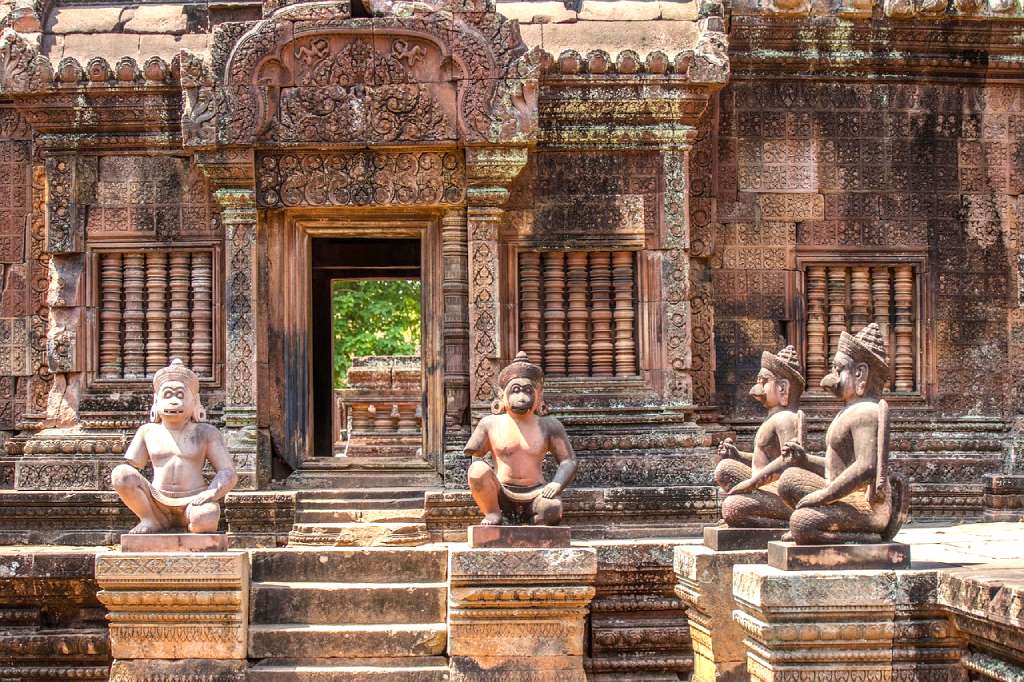
For something more elaborate but still less crowded than the main Angkor temples, Banteay Srei is often described as the “Citadel of Women” and is famous for its intricate pink sandstone carvings. It lies further from Siem Reap, so it takes a bit more planning, but the detail here is extraordinary and very different in scale and style from Angkor Wat.
If what you’re really chasing is that lost-to-the-jungle atmosphere, Beng Mealea is one of the most atmospheric temples you can visit. Partially collapsed and still wrapped in vegetation, it feels far wilder and less restored than the central Angkor temples. Walking through its crumbling corridors gives you a sense of what early explorers must have experienced before large-scale conservation began.
Adding one or two of these sites into your Siem Reap itinerary adds another layer to your trip as they tend to be quieter and less crowded, which makes it easier to slow down, linger, and take in the details in peace.
Where to Stay Near Angkor Wat
The best place to base yourself for visiting Angkor Wat is Siem Reap and there are plenty of options for every budget from fun and sociable backpacker hostels to luxury resorts.
If you want convenience, atmosphere and easy access to restaurants, cafes and nightlife, stay in or around Siem Reap town centre. This is where you’ll find a huge range of hostels, guesthouses, boutique hotels and mid-range stays, many with pools that are very welcome after long, hot, sweaty days exploring the temples. The town is quite lively in the evenings, especially around Pub Street, so I recommend staying a few streets away from the nightlife hub for a good nights sleep.
If you’re looking for something quieter, staying just outside the centre on the road leading towards Angkor can be a good idea. This area feels greener and more relaxed, puts you closer to the temples for early starts, and is still only a short tuk tuk ride from town. Many hotels here are set among gardens or rice fields and have a peaceful atmosphere perfect for relaxing after a day temple hopping.
The Best Budget Hotels in Siem Reap
If you’re travelling on a budget, Siem Reap is one of those places where your money goes far so you really don’t have to compromise much. You’ll find clean, comfortable hotels with friendly staff, pools and great locations at very reasonable prices.
Onederz Siem Reap – This hostel is a standout budget choice and consistently one of the highest-rated places in town. It’s social with a friendly atmosphere, has a big swimming pool, and is well located for exploring both the town and the temples. It’s a great option if you want to meet other travellers and backpackers without breaking the bank.
Central Blanche Residence – This budget hotel is another great affordable option if you prefer a more privacy. They offer private rooms, a pool, and a quieter setting just outside the busiest streets. It feels like excellent value for money and there’s an excellent free breakfast too.
The Best Mid-Range Hotels in Siem Reap
If you’re happy to spend a little more, Siem Reap really shines in the mid-range category, where you get boutique-style hotels, great service and beautiful pools without eye-watering prices.
Golden Temple Residence – This stunning boutique hotel is a favourite for good reason. It’s beautifully designed, well located near the river, and offers spacious rooms, a lovely pool and genuinely friendly service.
Memoire d’Angkor Boutique Hotel – Another great mid-range option, especially if you like stylish interiors and a calm atmosphere. It’s centrally located but slightly removed from the noise, and there’s an excellent onsite spa.
The Best Luxury Hotels Near Angkor Wat
If Angkor Wat is a once-in-a-lifetime trip and you want somewhere special to stay, Siem Reap has some outstanding luxury hotels that still offer good value compared to similar properties elsewhere in Southeast Asia.
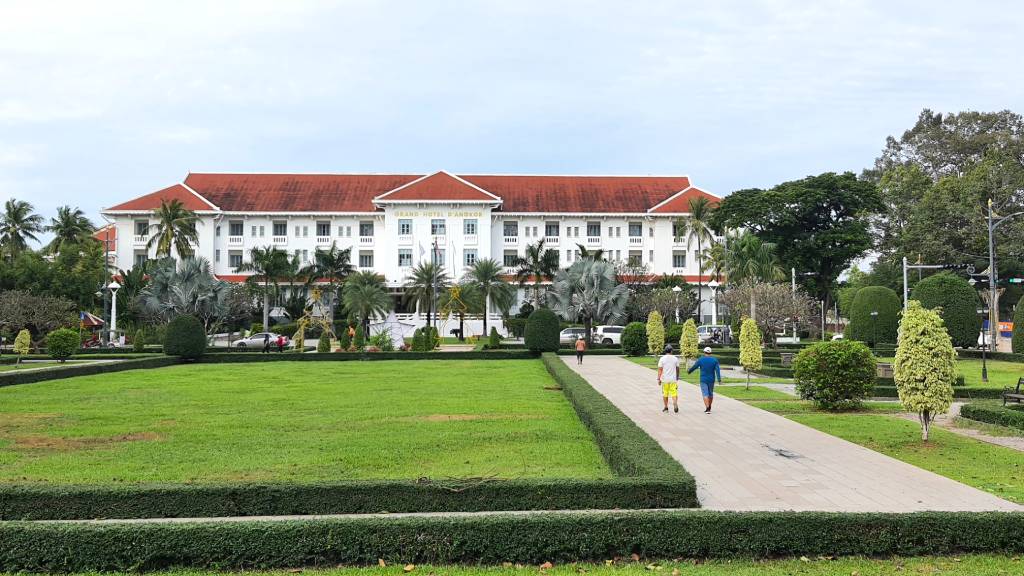
Raffles Grand Hotel d’Angkor – One of the most iconic places to stay in Siem Reap. With its colonial-era architecture, grand pool and impeccable service, it feels like stepping back in time and offers nothing short of an unforgettable experience.
Park Hyatt Siem Reap – A more contemporary luxury option, right in the heart of town. The design is sleek and modern, the pool area is excellent, and it’s ideal if you want high-end comfort with easy access to restaurants and nightlife.
Where to Eat and Drink in Siem Reap
Siem Reap has one of the best food scenes in Cambodia, and after long days wandering the temples, you’ll be very glad it does.
The town caters well to travellers, but it still manages to keep a strong local food culture, with everything from cheap street eats to refined Khmer cuisine and relaxed cocktail bars and western style cafes and restaurants.
You’ll find most restaurants clustered around the town centre and along the river, which makes it easy to wander out in the evenings and choose somewhere that you fancy the look of.
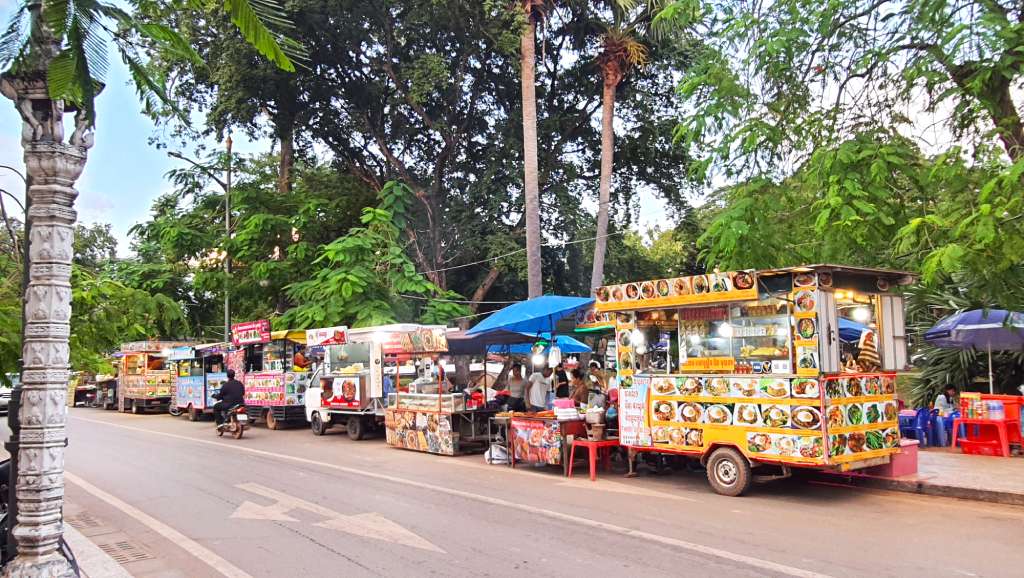
There’s also lots of street food stalls serving cheap snacks, drinks and local dishes, often for only a dollar or less. You’ll find many down by the river near the old market area. You’ll often get to sit on tiny plastic stools while enjoying your food for a local experience.
Khmer Food and Local Restaurants
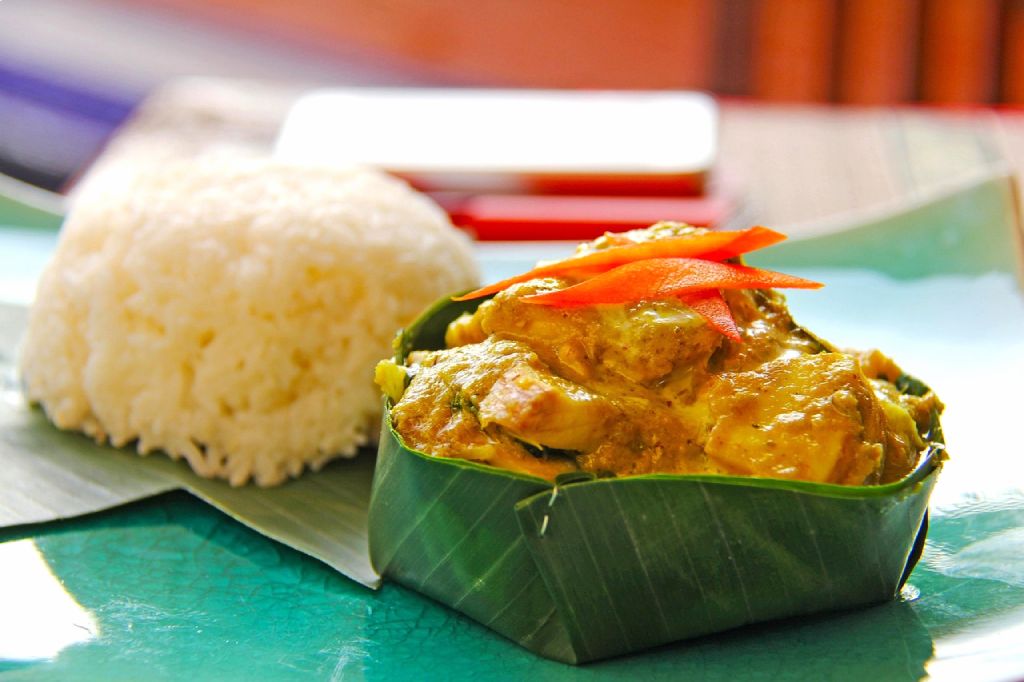
Trying traditional Cambodian food like Fish Amok (a creamy coconut fish curry) and Lok Lak (a tasty stir-fried beef dish) is something I really recommend doing properly in Siem Reap, as this is one of the best places in the country to do it.
As well as street food stalls there are also many nice restaurants where you can enjoy Khmer food in comfortable and relaxed surroundings. Here are a few of the best:
Chanrey Tree is one of my top picks for Khmer cuisine. The setting is beautiful, the atmosphere is calm and intimate, and the food feels like an introduction to Cambodian flavours done well rather than watered down. It’s a great place for a relaxed evening meal after temple-hopping.
HAVEN is another place I always feel good recommending. It’s a social enterprise restaurant that trains vulnerable young adults for careers in hospitality, and the food is genuinely excellent. The menu blends Khmer and Western dishes, the garden setting is relaxed, and eating here supports a really positive local initiative.
Cuisine Wat Damnak is more of a special-occasion option, offering refined Cambodian tasting menus using local ingredients. If you’re interested in food as part of the cultural experience and want something memorable, this is a standout choice.
For something simpler and more casual, Khmer Kitchen is a long-time favourite. It’s centrally located near the old market and serves consistently good and reliable local dishes at affordable prices.
Cafés and Breakfast Spots
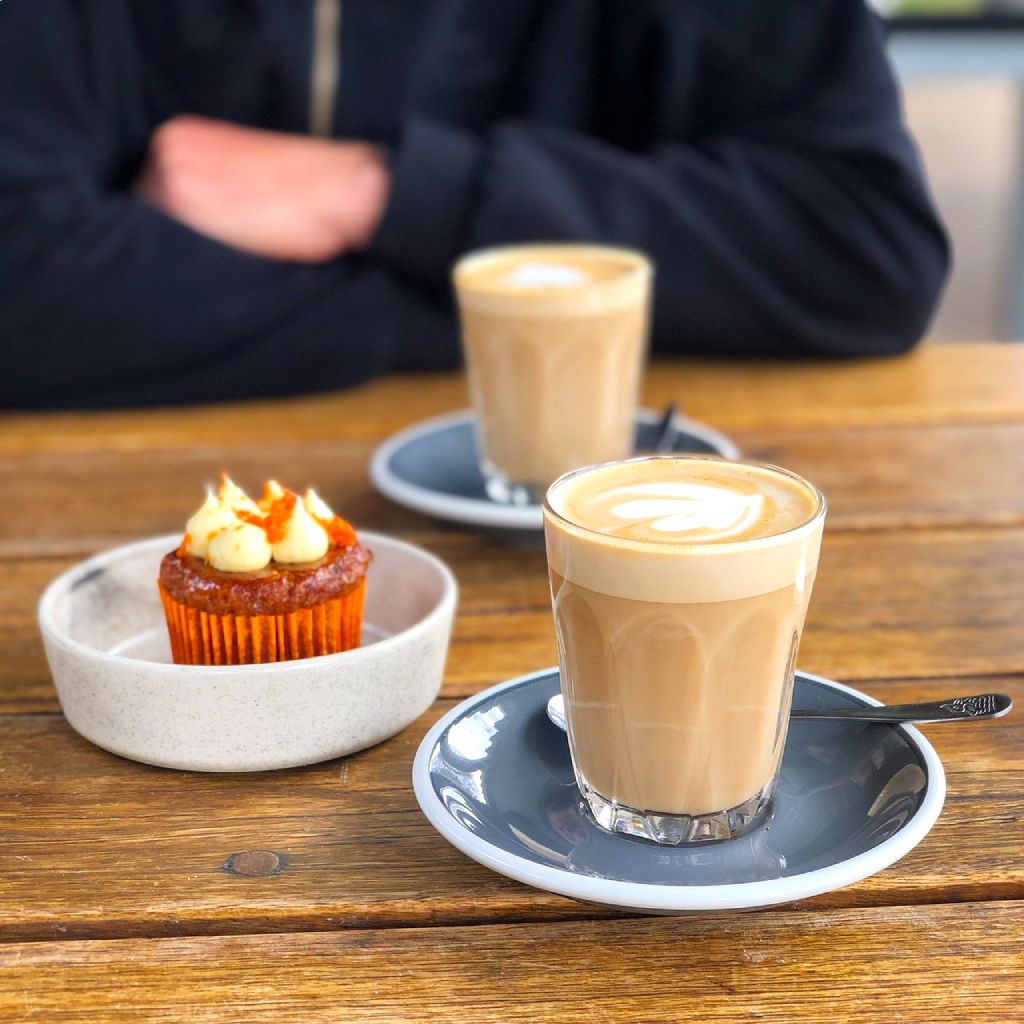
There’s also some great breakfast and coffee options in Siem Reap, whether you’re looking to fuel up between temple visits, get a bit of work done or just relax. Here’s some of my favourites:
Sister Srey Cafe is a popular spot for breakfast, brunch and light lunches. It’s relaxed, well priced, and known for good coffee and fresh, healthy dishes, which is exactly what you want after an early start for a sunrise temple visit.
The Little Red Fox Espresso is one of the best places in town for serious coffee and avocado toast. It’s small and often busy, but the quality is excellent. If you’re particular about your flat white or espresso, this is the place to go.
Brown Coffee is a Cambodian-owned chain that’s modern, air-conditioned and consistently good. It’s a great choice if you want strong WiFi and a cool, comfortable escape from the heat.
Peace Cafe is a lovely option if you prefer a quieter, more garden-style setting. It focuses on vegetarian and vegan food and has a calm, leafy atmosphere that feels far removed from the busier streets.
Drinks, Bars and Nightlife
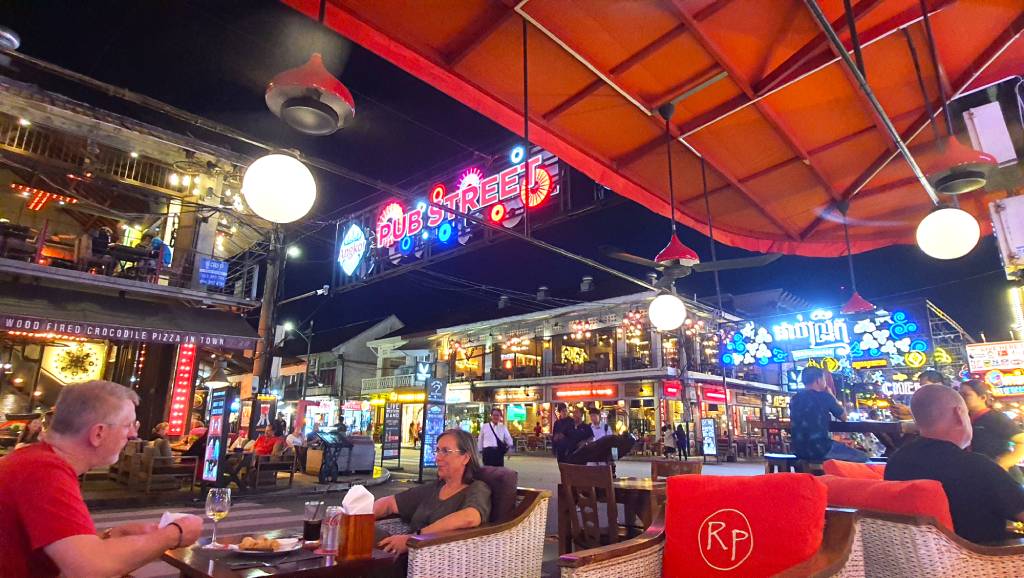
Siem Reap’s nightlife ranges from laid-back riverside bars to full-on party scenes, and, as the town isn’t too large, you can easily dip in and out depending on your mood.
Pub Street is the most famous area and worth seeing at least once. It’s loud, busy and very touristy (a bit like Khao San Road in Bangkok) but it can be fun for a drink or two and a good place to meet new people. Some of the bars and nightclubs here stay open til 5am.
If Pub Street is not your scene, you’ll find plenty of quieter alternatives just a short walk away.
Miss Wong Cocktail Bar is a great choice if you prefer somewhere atmospheric with well-made cocktails. It has a cosy, slightly old-world feel and is ideal for winding down in the evening.
Asana Old Wooden House is another lovely choice. Set inside one of the few remaining traditional wooden houses in town, it serves creative cocktails and has a relaxed courtyard vibe that entices you to stay longer than planned.
If you’d prefer something more cultural than clubby, Phare, The Cambodian Circus is one of the most worthwhile evening experiences in town. It combines theatre, acrobatics and live music, and it’s a genuinely engaging way to spend a night while supporting local artists. You can get your tickets here
The night markets are also worth a look in the evenings. You’ll find souvenirs, local crafts, clothes and street food, and while most of it is aimed at tourists, it’s still an enjoyable way to spend an evening, soaking up the atmosphere and picking up a few small souvenirs at affordable prices.
Final Thoughts on Visiting Angkor Wat
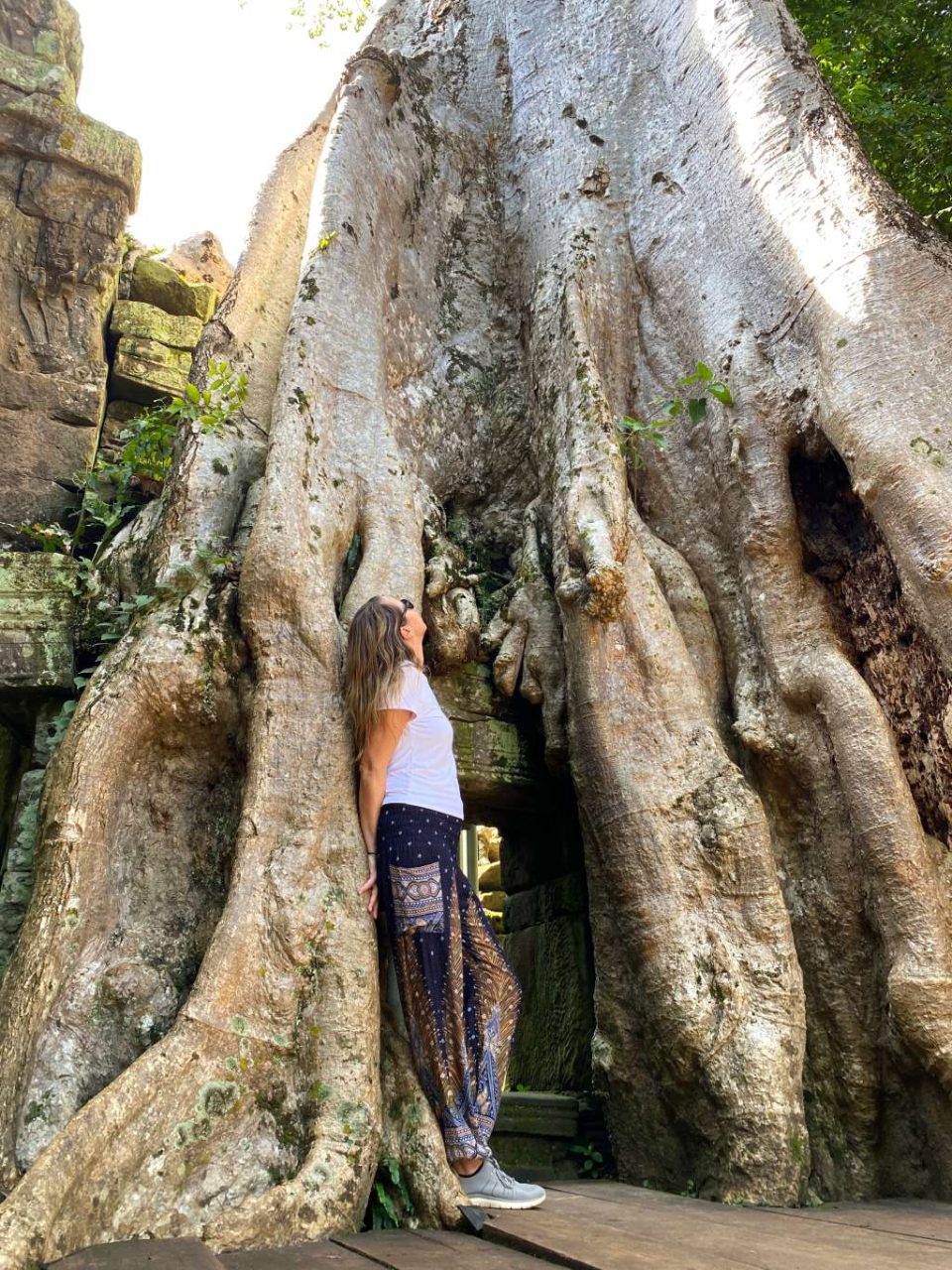
Visiting Ankgor Wat was one of my highlights of Southeast Asia and a place that should be on everyone’s bucket list.
I hope that with these tips you are able to avoid the crowds and enjoy your visit to Angkor Wat
And remember to allow some time to explore the town of Siem Reap too – perhaps allowing an extra day or two to explore other places like the floating villages, Kulem mountain and lesser known temples.
Adding a couple of these experiences into your Angkor Wat itinerary helps prevent temple fatigue and gives you a fuller sense of Cambodia beyond its most famous site. Siem Reap rewards anyone who stays curious and doesn’t rush straight through.
Plus, exploring beyond Angkor Wat itself reminds you that the Khmer Empire extended far wider than the postcard image most people know. The more you look, the more layers you uncover – not just of ancient stone, but of Cambodia’s long and complex story.
Read More Cambodia Blogs:
- Phnom Penh: The Good, The Bad and The Ugly
- Sleepy Kampot; Cambodia’s Most Underrated Destination
- Koh Rong, Cambodia’s Backpacker Paradise Island
- All Aboard Cambodia’s Bamboo Train!
- Why I Loved Backpacking Cambodia
Have you been to Angkor Wat? Do you have any more tips for visitors? Leave your tips in the comments below 🙂

6 comments
good tips I also love Cambodia 🙂
Thanks, yeah Cambodia is a great place
Angkor Wat is amazing and the food in Siem Reap is so good. We had a fantastic time there.
Cool thanks for sharing your pic ???? glad you had a good time at Angkor
Hi,
great blog.
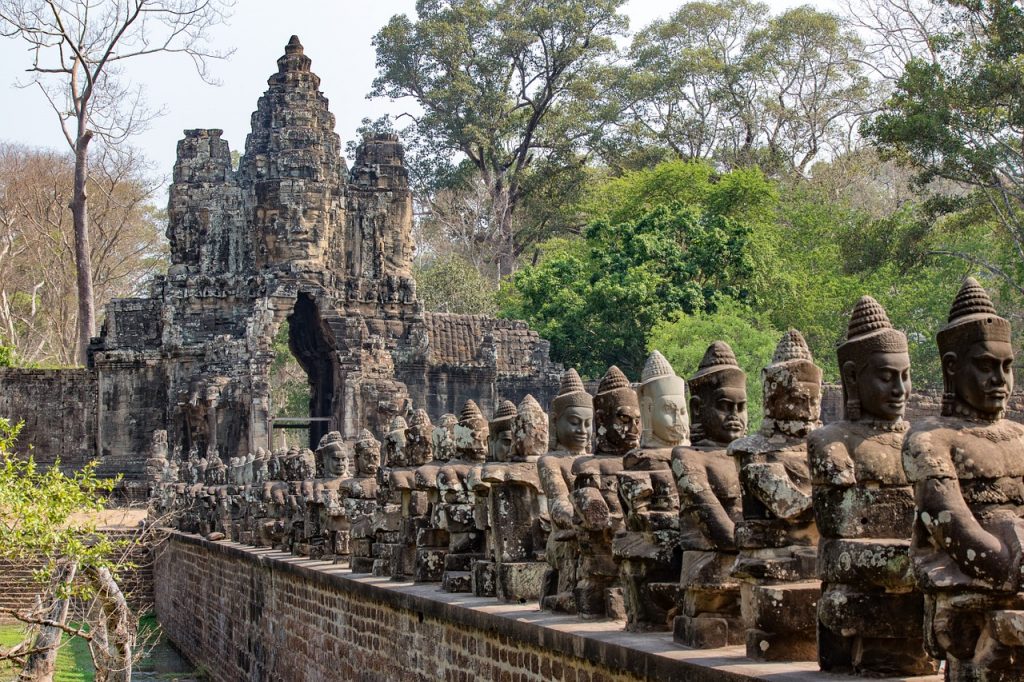
Please, can you tell me at what temple/place in Angkor Thom was taken a photo under which is written Angkor Thom, with many statues? It is the sixth photo from above.
Thank you.
Hey, I think this was just on a bridge on the road as you enter Angkor Thom.